Skip to the main content.

Personal Loans

Whether you're covering unexpected expenses, making a big purchase, or just need extra cash, our personal loans offer simple, flexible funding tailored to your needs.

Learn more...

Consolidation Loans

Simplify your finances with a loan that combines multiple payments into one. Our consolidation loans help reduce stress and keep your budget on track.

Learn more...

Home Improvement Loans

Upgrade your living space with financing designed for renovations, repairs, or remodeling. Our home improvement loans help you enhance your home’s comfort, value, and functionality—on your terms.

Learn more...

Symple Insights

Explore expert insights, financial tips, and strategic guidance from the Symple Lending team. Our insights and resource articles are your go-to source for empowering content that helps you make informed decisions on your journey to financial freedom.

Learn More...

Symple News

Stay up-to-date with the latest press releases, media features, and major announcements from Symple Lending. This section showcases how we're making headlines and driving innovation in the lending industry.

Learn More...

2 min read

What Is an Interest Rate—and How Is It Determined?

What Is an Interest Rate—and How Is It Determined?
3:13

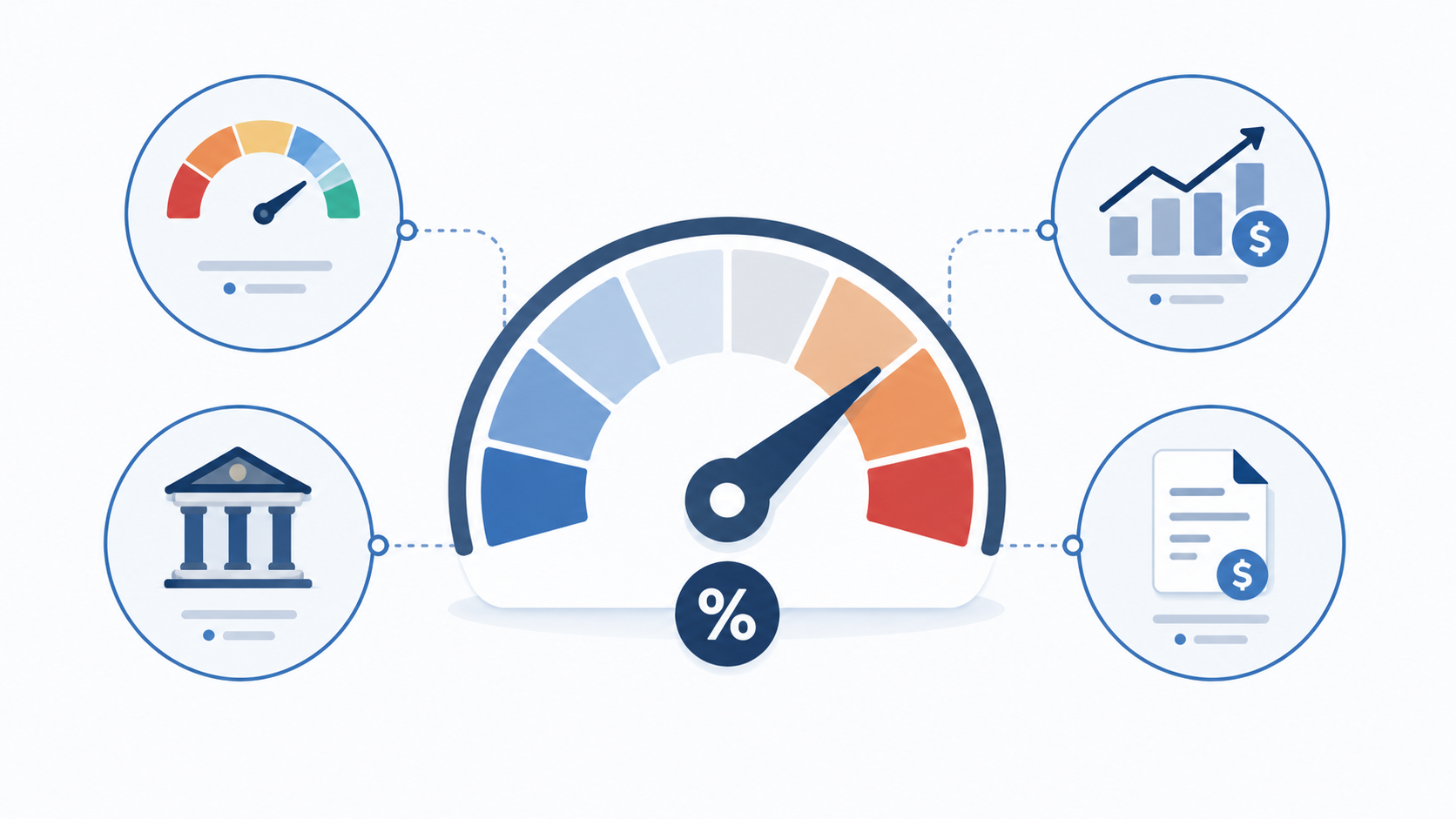
Leasing an apartment means paying to use someone else’s space. So, exactly what is an interest rate? According to common knowledge, it works the same way—you are simply renting someone else’s money. Viewing this extra charge as the price of time simplifies interest rate calculation basics, revealing how it beautifully functions as both a borrower’s cost and a saver’s reward.

How Banks Set the 'Rent' on Money: The Balance Between Savers and Borrowers

Think of your local bank as a financial matchmaker. When you deposit a paycheck, you supply the funds your neighbor uses to buy a car. The bank pays you for saving, then charges them for borrowing. This daily tug-of-war over available cash is exactly how lenders set interest rates.

When everyone wants a mortgage but savings are low, money becomes scarce. This relationship between supply and demand for capital acts as one of the biggest loan interest rate factors, pushing borrowing costs up. Local banks don't make these decisions in a vacuum, though. Universal borrowing costs are ultimately guided by central banking policies.

The Economy’s Thermostat: Why the Federal Reserve Turns the Heat Up or Down

That hidden hand controlling the thermostat belongs to the Federal Reserve. When grocery prices rise too fast, the central bank turns up borrowing costs to cool things down. The Federal Reserve's rate adjustments create a direct and measurable ripple effect:

  • The Fed raises its baseline rate for banks.
  • Banks pass this extra expense directly to you.
  • Your credit card bills increase, discouraging new debt.

This impact of inflation on borrowing costs slows everyday spending, which eventually stabilizes prices. While the role of the federal funds rate in the economy establishes a national starting line for lenders, it isn't the final number you see on your loan application. Your individual borrowing profile dictates the final monthly payment.

Your Personal Rate: Why Your Credit Score Dictates Your Monthly Payment

While the government sets a baseline price for money, lenders add a markup based on trust. The connection between your credit score and interest rate acts as a personal risk grade. To finalize your cost, lenders evaluate three specific factors:

  • Credit score: Your track record of repaying debt.
  • Loan length: Longer timelines create more uncertainty.
  • Down payment: Upfront cash reduces their risk.

Beyond trust, loan structure changes your costs. Choosing a fixed vs variable interest rate is critical; fixed locks your price forever, while variable slides with the economy. Securing lower interest rates on debt requires balancing these personal choices with strategic market timing.

Take Control of Your Interest: How to Adjust Your Strategy as Rates Shift

Monetary policy shifts don't have to be a guessing game for your wallet. When you track the prime rate and consumer credit, you can pivot: when rates climb, utilize high-yield savings and pay down variable-rate debt. Recognizing why the financial thermostat changes gives you the confidence to decode news headlines and make smarter everyday money choices.

Disclaimer: The information provided in this blog post is for educational and informational purposes only and should not be considered as financial, legal, investment, or tax advice. Symple Lending is not responsible for any financial outcomes resulting from following the information or ideas shared in this blog. Every individual's financial situation is unique, and we strongly encourage readers to take their own circumstances into consideration and consult with a qualified financial, legal, tax, and investment advisor before making any financial decisions. Symple Lending does not provide financial, legal, tax, or investment advice.

What Is an Interest Rate—and How Is It Determined?

What Is an Interest Rate—and How Is It Determined?

Leasing an apartment means paying to use someone else’s space. So, exactly what is an interest rate? According to common knowledge, it works the same...

Continue Reading
Moving Costs Out of Control? Here's How to Plan, Save, and Stay on Budget

Moving Costs Out of Control? Here's How to Plan, Save, and Stay on Budget

The average person moves about 11 times in their lifetime, and almost every single time, the moving costs come as a surprise. You start with a rough...

Continue Reading
APR vs. Interest Rate: What’s the Difference?

APR vs. Interest Rate: What’s the Difference?

When shopping for a mortgage, auto loan, or credit card, you will inevitably encounter two crucial numbers. Understanding APR vs. Interest Rate:...

Continue Reading