

Skip to the main content.

Personal Loans

Whether you're covering unexpected expenses, making a big purchase, or just need extra cash, our personal loans offer simple, flexible funding tailored to your needs.

Learn more...

Consolidation Loans

Simplify your finances with a loan that combines multiple payments into one. Our consolidation loans help reduce stress and keep your budget on track.

Learn more...

Home Improvement Loans

Upgrade your living space with financing designed for renovations, repairs, or remodeling. Our home improvement loans help you enhance your home’s comfort, value, and functionality—on your terms.

Learn more...

Symple Insights

Explore expert insights, financial tips, and strategic guidance from the Symple Lending team. Our insights and resource articles are your go-to source for empowering content that helps you make informed decisions on your journey to financial freedom.

Learn More...

Symple News

Stay up-to-date with the latest press releases, media features, and major announcements from Symple Lending. This section showcases how we're making headlines and driving innovation in the lending industry.

Learn More...

2 min read

How Loan Term Length Changes the Total Interest You Pay (With Simple Examples)

How Loan Term Length Changes the Total Interest You Pay (With Simple Examples)
How Loan Term Length Changes the Total Interest You Pay
3:43

Taking out a loan is a significant financial decision, and understanding how loan term length impacts the total interest you pay is crucial. Let's break this down with straightforward examples and provide you with tips to minimize your interest costs.

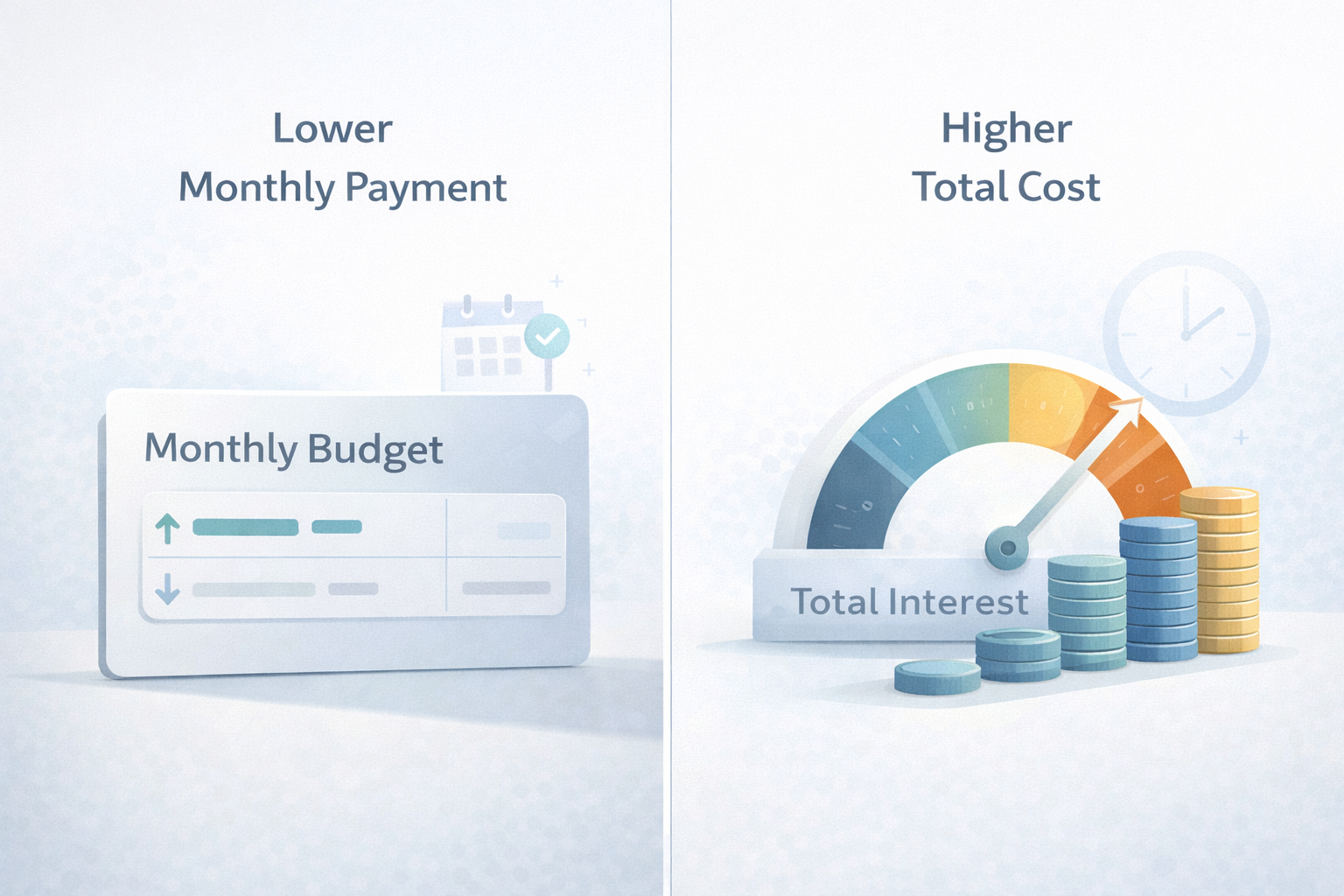
When you borrow money, the loan term length refers to the period you have to repay the loan. The longer the term, the smaller your monthly payments, but you’ll pay more in total interest over the life of the loan. Conversely, a shorter term means higher monthly payments but less total interest. This is due to loan amortization, where each monthly payment goes toward both the principal and the interest.

Comparing Loan Term Lengths: 36 vs. 60 vs. 72 Months

Consider a loan of $10,000 at a 5% annual percentage rate (APR). Here’s how the total interest varies with different terms:

  • 36 months: With shorter terms, your monthly payment is higher, roughly $299, but the total interest paid is approximately $764.
  • 60 months: Extending the term to 60 months lowers your monthly payment to about $189. However, the total interest increases to around $1,322.
  • 72 months: Opting for a longer term like 72 months further reduces your monthly payment to $161, but the total interest climbs to approximately $1,610.

The longer the loan term, the more you end up paying in total interest, even though your monthly payments are lower. Adjusting the APR will also affect these numbers. A higher APR increases the total interest paid, whereas a lower APR decreases it. For a deeper dive, visit https://symplelending.com/insights/how-loan-term-length-affects-your-financial-future.

Estimating Interest Cost Without Heavy Math

To estimate interest costs without complex calculations, consider using online loan calculators. Input your loan amount, APR, and term length to get an instant estimate of your monthly payments and total interest. This is a simple and effective way to compare different loan scenarios.

Tips to Reduce Total Interest

Reducing the total interest you pay over the life of a loan involves a few strategic steps:

  • Shop for Better Rates: Comparing loan offers from different lenders can help you find a lower APR, reducing your total interest.
  • Make a Down Payment: A larger down payment reduces the amount you need to borrow, thereby decreasing your interest costs.
  • Opt for a Shorter Term: While the monthly payments are higher, a shorter term significantly reduces the total interest paid.
  • Make Extra Payments: Any additional payments you make toward your loan principal can decrease the total interest you pay.

Understanding the dynamics of loan term length and interest can empower you to make informed financial decisions that save you money in the long run. Ready to explore your options? https://apply.symplelending.com/ today and take control of your financial future.

Disclaimer: The information provided in this blog post is for educational and informational purposes only and should not be considered as financial, legal, investment, or tax advice. Symple Lending is not responsible for any financial outcomes resulting from following the information or ideas shared in this blog. Every individual's financial situation is unique, and we strongly encourage readers to take their own circumstances into consideration and consult with a qualified financial, legal, tax, and investment advisor before making any financial decisions. Symple Lending does not provide financial, legal, tax, or investment advice.

Why Multiple Monthly Bills Feel Unmanageable (and What to Do First)

Why Multiple Monthly Bills Feel Unmanageable (and What to Do First)

Managing rent or a mortgage, utilities, credit cards, insurance, subscriptions, medical bills, and loan payments can make an ordinary month feel...


Continue Reading
Is Debt Consolidation Worth It? 7 Questions to Answer Before You Apply

Is Debt Consolidation Worth It? 7 Questions to Answer Before You Apply

Debt consolidation is worth it when the new loan's rate, fees, and repayment term genuinely improve your current situation—not just your monthly...

Continue Reading
Is a Consolidation Loan a Good Idea? Run the Before-and-After Math

Is a Consolidation Loan a Good Idea? Run the Before-and-After Math

A consolidation loan is worth considering when the new terms genuinely improve your situation—not just because it replaces several payments with one....

Continue Reading
Monthly Payment vs. Total Cost: The Core Tradeoff of Longer Loan Terms

Monthly Payment vs. Total Cost: The Core Tradeoff of Longer Loan Terms

Learn the crucial tradeoff between monthly payments and total costs when choosing longer loan terms.

Continue Reading
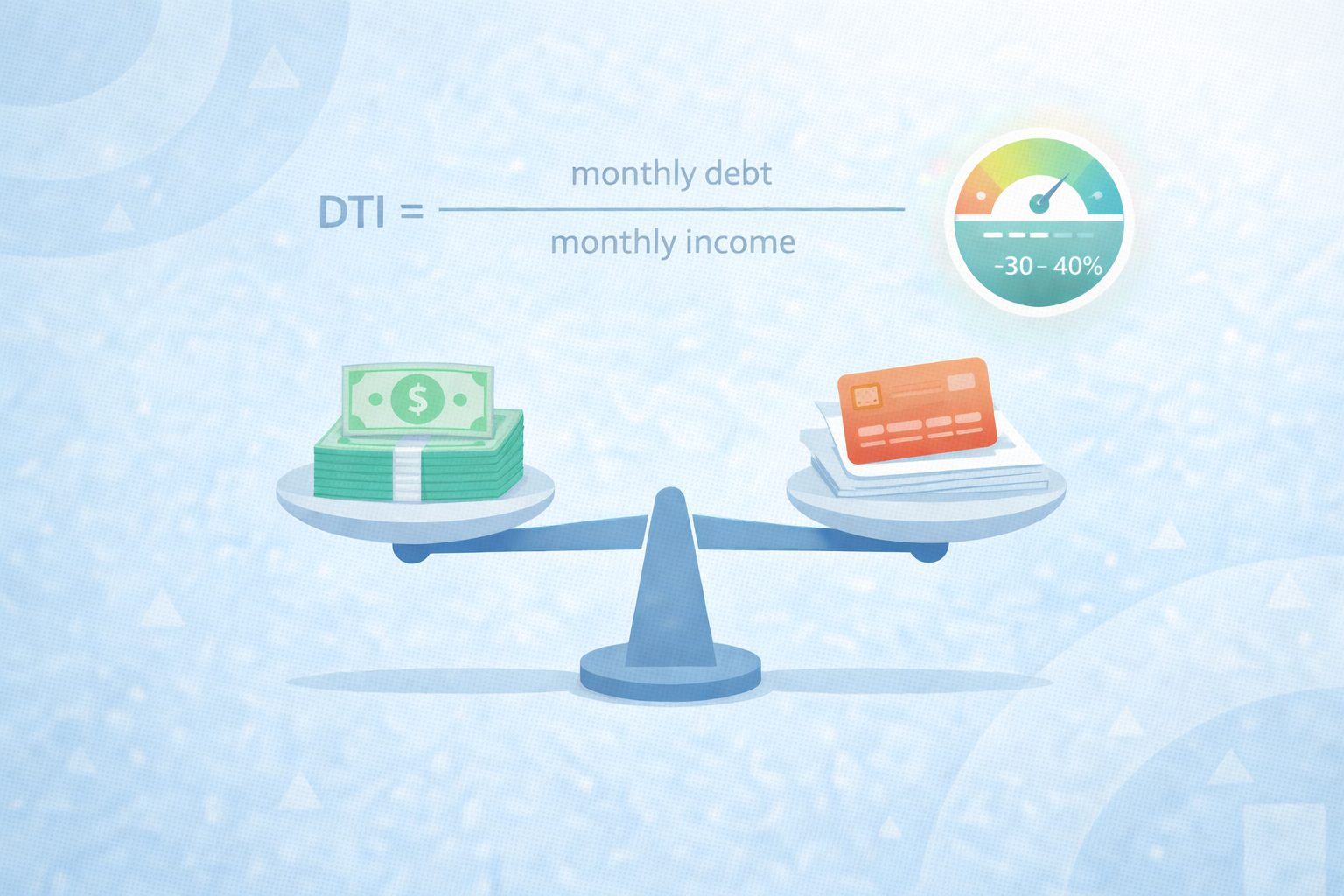
Debt-to-Income Ratio for Personal Loans: How to Calculate DTI and What “Good” Looks Like

Debt-to-Income Ratio for Personal Loans: How to Calculate DTI and What “Good” Looks Like

Learn how to calculate your Debt-to-Income Ratio and understand what a good DTI looks like to lenders for personal loans.

Continue Reading
Cash Flow and Bank Statements: How Lenders Validate Repayment Ability

Cash Flow and Bank Statements: How Lenders Validate Repayment Ability

Learn how lenders evaluate your cash flow and bank statements, and discover essential tips to present a strong financial profile for loan approval.

Continue Reading