Skip to the main content.

Personal Loans

Whether you're covering unexpected expenses, making a big purchase, or just need extra cash, our personal loans offer simple, flexible funding tailored to your needs.

Learn more...

Consolidation Loans

Simplify your finances with a loan that combines multiple payments into one. Our consolidation loans help reduce stress and keep your budget on track.

Learn more...

Home Improvement Loans

Upgrade your living space with financing designed for renovations, repairs, or remodeling. Our home improvement loans help you enhance your home’s comfort, value, and functionality—on your terms.

Learn more...

Symple Insights

Explore expert insights, financial tips, and strategic guidance from the Symple Lending team. Our insights and resource articles are your go-to source for empowering content that helps you make informed decisions on your journey to financial freedom.

Learn More...

Symple News

Stay up-to-date with the latest press releases, media features, and major announcements from Symple Lending. This section showcases how we're making headlines and driving innovation in the lending industry.

Learn More...

2 min read

Credit Score Impact in an Emergency: Utilization vs. Installment Loans

Credit Score Impact in an Emergency: Utilization vs. Installment Loans
3:08

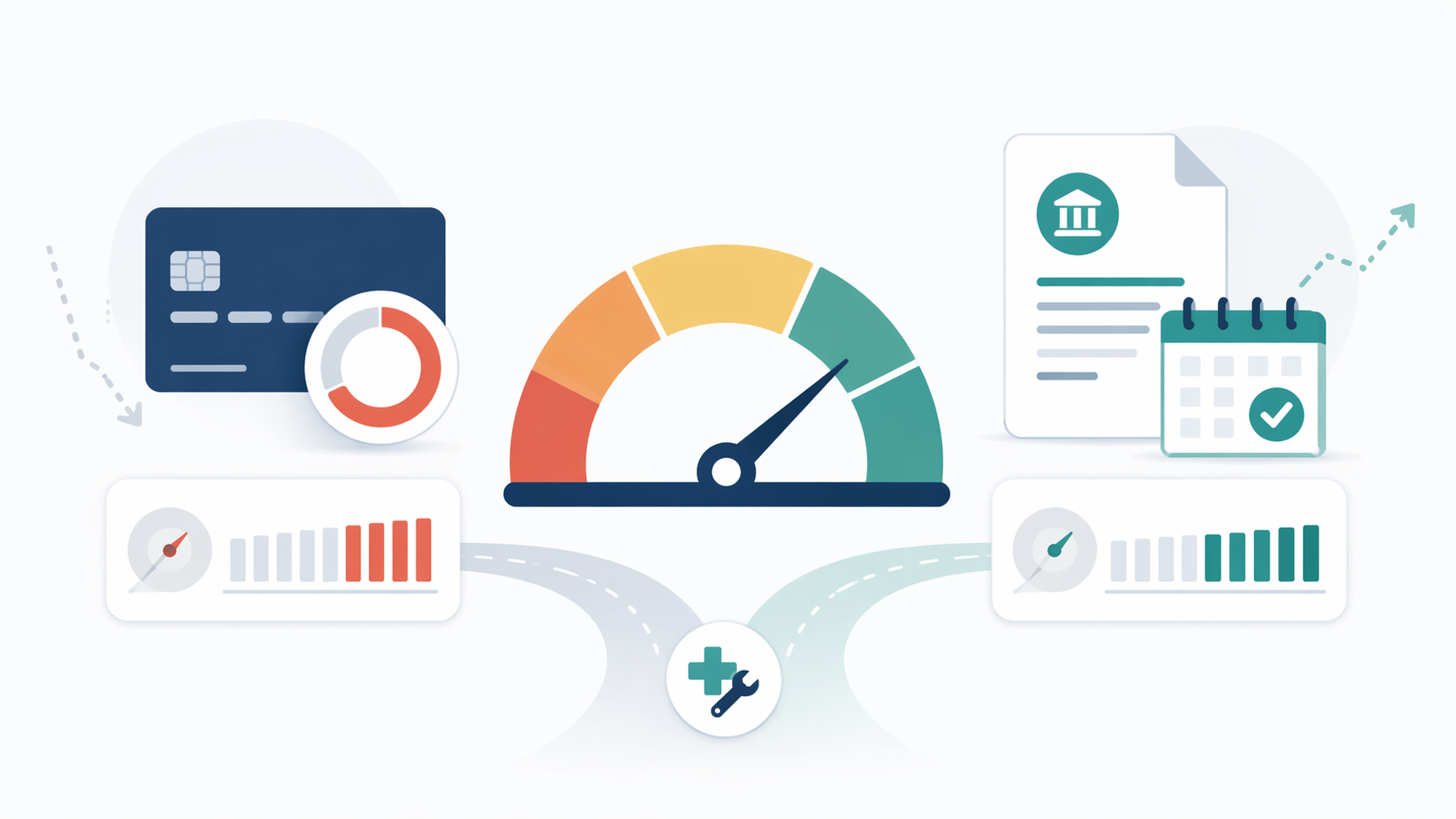
Your engine sputters, and the mechanic hands you a $1,500 estimate. Many assume all debt is equal, but industry data reveals that picking the wrong "home" for this expense can tank your score by 40 points overnight. Charging that $1,500 to a credit card acts like a loud siren to bureaus, whereas a personal loan is merely a whisper. Mastering this difference provides essential emergency credit score tips for anyone learning how to protect credit score in an emergency.

The 'Fullness Meter' Trap: Why Maxing Out a Credit Card Sinks Your Score

Most people assume that if an emergency expense stays under their limit, their score is safe. But credit cards actually act like a fullness meter. If your card is a 10-gallon tank and you pump in 9 gallons, the "low fuel" warning blinks. This credit card utilization ratio measures exactly how much of your available credit you are currently using.

Crossing the 30% threshold immediately signals financial stress. Before swiping for a sudden repair, do a quick math check to gauge the impact of maxing out credit cards in emergencies:

  • Find your total credit limit (e.g., $3,000).
  • Add your planned emergency expense (e.g., $1,000).
  • Divide the expense by the limit to find your resulting percentage (33%).

Breaking that golden 30% rule triggers a severe credit utilization ratio impact on FICO scores, making it look like you are scrambling for cash. Fortunately, installment loans offer a safer alternative.

Why an Installment Loan Proves You Have a Plan—Not Just a Crisis

Most people think $2,000 of debt is exactly the same no matter where it lives. But a loan operates under a set contract, making the installment loan vs revolving credit score calculation entirely different. Instead of looking like a maxed-out open tab, it shows you have a predictable, long-term repayment plan.

You might worry that applying for new money will hurt your standing. While a hard inquiry personal loan application causes a tiny, temporary dip, it is far less damaging than blowing past your 30% utilization limit. Plus, adding this account actually improves your "credit mix"—a scoring factor that rewards you for handling different types of debt responsibly.

Choosing a steady payment schedule over a maxed-out card protects your financial foundation. This structural difference creates a much safer personal loan credit score impact when unexpected bills strike.

Protect Your Future Score: How to Choose the Right Debt in a Financial Crisis

Choosing the right debt vehicle helps avoid credit score damage during financial crises.

  • Choose a credit card if: The bill is small and you can pay it next month.
  • Choose a personal loan if: The emergency is $2,000+ and comparing personal loan interest rates vs credit card APR saves money.

The Bottom Line: Your credit score is a tool for future goals, like a mortgage. Protect it by keeping your credit card "tank" low. You are ready to handle emergencies strategically—start by reviewing your loan options today.

Disclaimer: The information provided in this blog post is for educational and informational purposes only and should not be considered as financial, legal, investment, or tax advice. Symple Lending is not responsible for any financial outcomes resulting from following the information or ideas shared in this blog. Every individual's financial situation is unique, and we strongly encourage readers to take their own circumstances into consideration and consult with a qualified financial, legal, tax, and investment advisor before making any financial decisions. Symple Lending does not provide financial, legal, tax, or investment advice.

Credit Score Impact in an Emergency: Utilization vs. Installment Loans

Credit Score Impact in an Emergency: Utilization vs. Installment Loans

Your engine sputters, and the mechanic hands you a $1,500 estimate. Many assume all debt is equal, but industry data reveals that picking the wrong...

Continue Reading
Why You Struggle with Budgeting — And Exactly How to Fix It

Why You Struggle with Budgeting — And Exactly How to Fix It

Did you know that nearly 75% of Americans say they've tried budgeting at some point, but most give up within the first few months? Here's the thing:...

Continue Reading
The Anatomy of a Consolidation Loan: Rates, Terms, Fees, and What to Watch For

The Anatomy of a Consolidation Loan: Rates, Terms, Fees, and What to Watch For

When you’re exploring ways to simplify and pay off credit card balances, a consolidation loan can seem straightforward on the surface.

Continue Reading