Skip to the main content.

Personal Loans

Whether you're covering unexpected expenses, making a big purchase, or just need extra cash, our personal loans offer simple, flexible funding tailored to your needs.

Learn more...

Consolidation Loans

Simplify your finances with a loan that combines multiple payments into one. Our consolidation loans help reduce stress and keep your budget on track.

Learn more...

Home Improvement Loans

Upgrade your living space with financing designed for renovations, repairs, or remodeling. Our home improvement loans help you enhance your home’s comfort, value, and functionality—on your terms.

Learn more...

Symple Insights

Explore expert insights, financial tips, and strategic guidance from the Symple Lending team. Our insights and resource articles are your go-to source for empowering content that helps you make informed decisions on your journey to financial freedom.

Learn More...

Symple News

Stay up-to-date with the latest press releases, media features, and major announcements from Symple Lending. This section showcases how we're making headlines and driving innovation in the lending industry.

Learn More...

2 min read

Will a Consolidation Loan or Personal Loan Help Your Credit Score? Key Factors to Know

Will a Consolidation Loan or Personal Loan Help Your Credit Score? Key Factors to Know
Will a Consolidation Loan or Personal Loan Help Your Credit Score?
3:50

You’ve likely heard that applying for new credit temporarily lowers your rating. While experts confirm a short-term dip is normal, the link between debt consolidation and credit score health is often misunderstood. Swapping multiple high-interest cards for a single personal loan can fast-track your recovery.

Think of your report as a "financial mirror" reflecting your habits. Because lenders prefer lower credit utilization, the positive impact of debt consolidation on FICO score models usually outweighs the initial drop quickly.

The 'Workout Analogy': Why Your Score Dips Before It Climbs

Taking out a consolidation loan often feels counterintuitive because your credit score usually drops right after you sign the paperwork. Think of this process like a workout at the gym. Your muscles—or in this case, your credit profile—experience immediate stress and "soreness" (a lower score) so they can recover and grow stronger than before.

This temporary dip generally comes from three specific actions that happen behind the scenes:

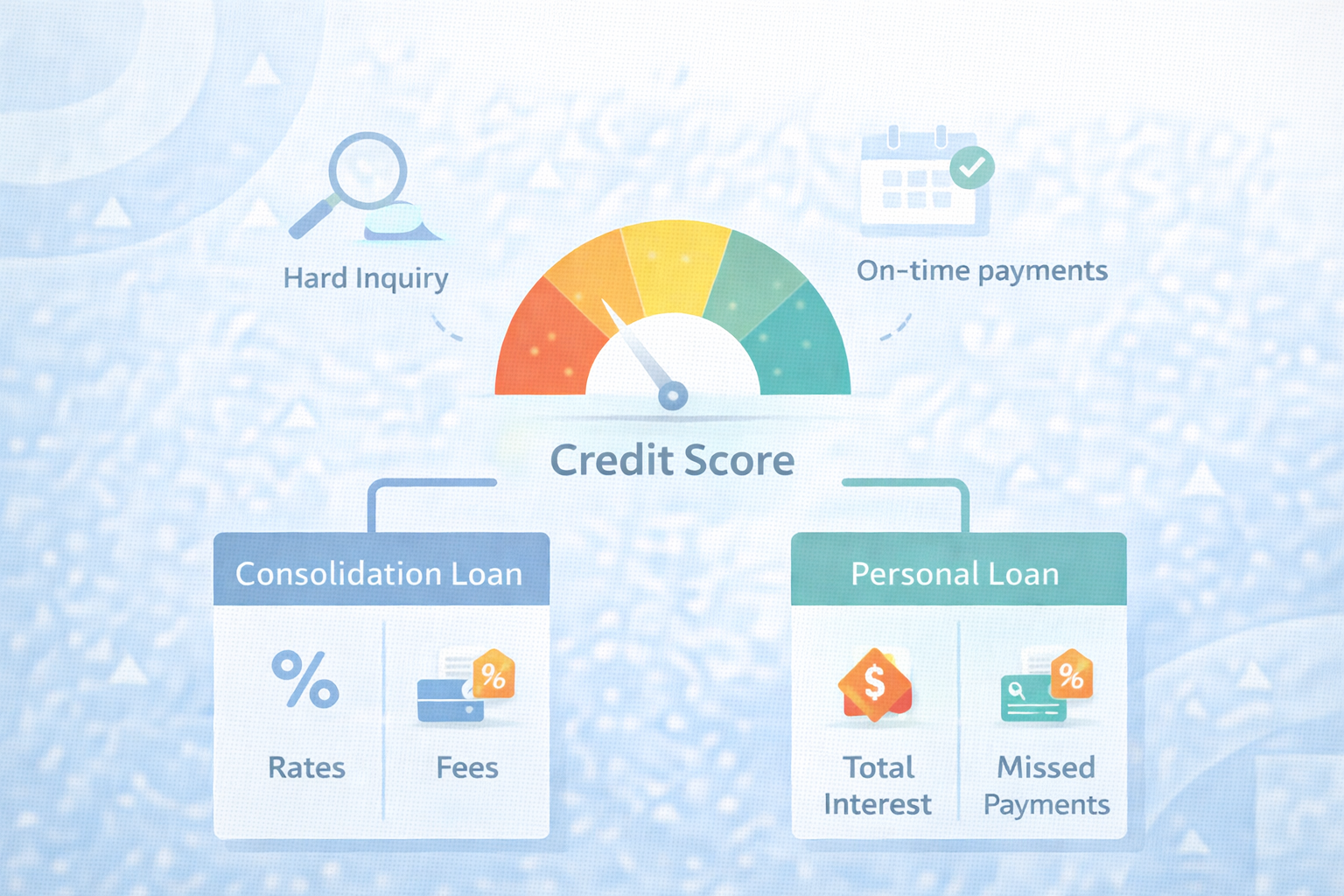
  • Hard Inquiry: A formal review of your credit file by the lender to assess risk, often costing you roughly 5–10 points.
  • Average Age Reduction: Adding a brand-new account lowers the average lifespan of your credit history, especially if your other accounts are old.
  • New Credit Risk: Algorithms view opening any new line of credit as a slight, short-term financial uncertainty.

Fortunately, this dip is usually minor and recovers quickly as you prove you can manage the new monthly payment. Once the initial shock wears off, you set the stage for a massive rebound by changing how your debt is categorized and slashing your utilization.

Slashing Your Utilization: How Shifting Debt Categories Boosts Your FICO Score

The quickest way to repair that initial score drop involves a metric called credit utilization, which accounts for nearly a third of your total credit score. When you use a personal loan to pay off your credit cards, you aren't just moving money around; you are fundamentally changing how credit bureaus view your financial health.

Credit scoring models get nervous when you max out your limits because it suggests you are relying too heavily on borrowed money to get by. By moving those balances to a loan, your card balances drop to zero, drastically improving your credit utilization after consolidation. This signals to lenders that you have regained control of your finances.

Beyond just lowering balances, this strategy helps by shifting revolving debt to installment debt. Revolving debt, like credit cards, is considered riskier because the payment amounts fluctuate and there is no fixed end date. Converting that burden into a fixed loan stabilizes your profile, effectively diversifying credit mix for better scores.

However, many borrowers accidentally sabotage this progress by closing their newly paid-off credit cards. Closing those accounts reduces your total available credit limit, which can spike your utilization rate right back up. To lock in these gains permanently, you must keep those accounts open but dormant—a discipline vital for long-term success.

Your Post-Loan Action Plan: Securing the Gains and Avoiding the Trap

Transforming debt into a single payment creates breathing room, but building credit history with personal loans requires discipline. Because your payment history makes up 35% of your profile, consistent execution is vital for protecting your on-time payments and credit score.

To cement these gains and avoid sliding back, follow this routine:

  • Set up autopay immediately.
  • Keep old cards open but empty—avoid closing credit card accounts after consolidation.
  • Monitor your score monthly.

Disclaimer: The information provided in this blog post is for educational and informational purposes only and should not be considered as financial, legal, investment, or tax advice. Symple Lending is not responsible for any financial outcomes resulting from following the information or ideas shared in this blog. Every individual's financial situation is unique, and we strongly encourage readers to take their own circumstances into consideration and consult with a qualified financial, legal, tax, and investment advisor before making any financial decisions. Symple Lending does not provide financial, legal, tax, or investment advice.

Will a Consolidation Loan or Personal Loan Help Your Credit Score? Key Factors to Know

Will a Consolidation Loan or Personal Loan Help Your Credit Score? Key Factors to Know

You’ve likely heard that applying for new credit temporarily lowers your rating. While experts confirm a short-term dip is normal, the link between ...

Continue Reading
What to Do When Your Monthly Bills Suddenly Spike: A Step-by-Step Guide

What to Do When Your Monthly Bills Suddenly Spike: A Step-by-Step Guide

The average household spends over $2,000 a year on energy alone, and that number can jump overnight without a single change in your lifestyle. One...

Continue Reading
Thousands Are Applying Daily for This Overlooked Debt Relief Strategy in 2026

Thousands Are Applying Daily for This Overlooked Debt Relief Strategy in 2026

A quiet shift is underway: Americans buried in credit card debt are discovering an option that replaces high-interest payments with a structured...

Continue Reading
Understanding Personal Loans: Bad Credit Edition

Understanding Personal Loans: Bad Credit Edition

Feeling like the words "bad credit" are a locked door when you need financial help? It’s a stressful place to be, but it’s not a dead end. Knowing...

Continue Reading
Navigating Personal Loans with Bad Credit

Navigating Personal Loans with Bad Credit

When you need a loan but have a challenging credit history, it’s easy to feel like all the doors are closed. The good news is that having poor credit...

Continue Reading
A Complete Guide to How Personal Loans Affect Your Credit Score

A Complete Guide to How Personal Loans Affect Your Credit Score

Did you know that a personal loan could both hurt and help your credit score—sometimes simultaneously? While most borrowers worry about the negative...

Continue Reading