Skip to the main content.

Personal Loans

Whether you're covering unexpected expenses, making a big purchase, or just need extra cash, our personal loans offer simple, flexible funding tailored to your needs.

Learn more...

Consolidation Loans

Simplify your finances with a loan that combines multiple payments into one. Our consolidation loans help reduce stress and keep your budget on track.

Learn more...

Home Improvement Loans

Upgrade your living space with financing designed for renovations, repairs, or remodeling. Our home improvement loans help you enhance your home’s comfort, value, and functionality—on your terms.

Learn more...

Symple Insights

Explore expert insights, financial tips, and strategic guidance from the Symple Lending team. Our insights and resource articles are your go-to source for empowering content that helps you make informed decisions on your journey to financial freedom.

Learn More...

Symple News

Stay up-to-date with the latest press releases, media features, and major announcements from Symple Lending. This section showcases how we're making headlines and driving innovation in the lending industry.

Learn More...

2 min read

Late Payment Fees vs. Default: What Happens When You Miss a Due Date

Late Payment Fees vs. Default: What Happens When You Miss a Due Date
3:30

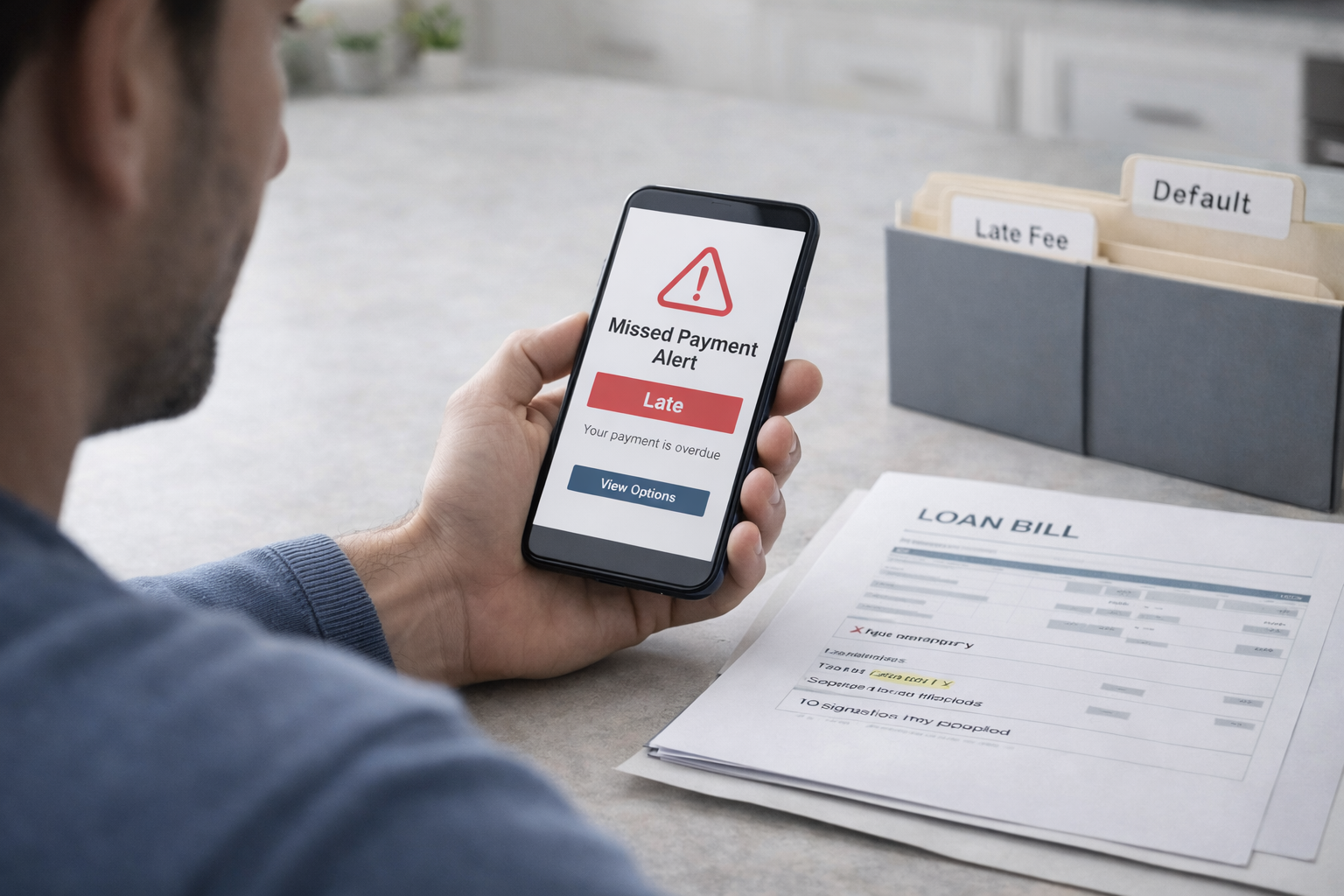
We’ve all felt that sudden panic of a forgotten bill. Missing a due date doesn't ruin your finances overnight. Industry standards offer a financial grace period—extra days to fix a missed loan payment with a simple late payment fee before a 180-day countdown turns a slap on the wrist into a credit crisis.

The 30-Day Grace Period: How to Waive Your First Late Fee and Protect Your Score

Missing a payment by three days acts just like returning a library book late: you pay a small penalty to keep the account active, but it doesn't hit your permanent record. Most major creditors use a strict reporting window to give you a chance to catch up. Banks won't officially report a 30-day late payment to the credit bureaus until a full month actually passes, giving you critical time to resolve the issue.

Because your score is currently safe, your immediate goal is erasing the charge using a "goodwill waiver." Banks routinely forgive a first-time personal loan late fee for customers in good standing. Take these steps within the first 24 hours of a missed payment:

  • Pay the minimum balance: Submit at least the minimum payment online immediately to halt further system escalations.
  • Call customer service: Speak directly with a representative rather than relying on automated systems.
  • Request a waiver: Politely ask for a one-time goodwill waiver for the penalty.

Handling this early protects your score, but ignoring it past that window pushes you toward true delinquency and the eventual 90-day warning sign on your credit report.

Delinquency vs. Default: Decoding the 90-Day Warning Sign on Your Credit Report

Crossing that 30-day line without paying pushes your account into official delinquency. Think of your credit history as a financial report card. Getting a quick late fee is like missing one homework assignment, but a delinquency is a failing grade that scars your transcript for seven years. The FICO score damage from missed due dates accelerates as you hit 60, then 90 days late. During this critical warning period, the bank still wants to work with you because you are simply behind on the agreement.

Ignoring those escalating warnings eventually triggers a loan default. The main difference between delinquency and default is that delinquency means you are behind, while default means the contract is entirely dead. The bank officially gives up, "charges off" the account as a financial loss, and hands it to a debt collection agency. Exactly how long it takes before a loan goes into default depends entirely on the specific creditor, but it typically strikes around 120 or 180 days after the initial missed payment. Before reaching this severe breaking point, you must take control.

Your 3-Step Recovery Plan: How to Reverse the Damage of a Missed Due Date

Take immediate action to prevent missed payments from escalating into financial disasters:

  • Call: Contact lenders immediately to request goodwill waivers for simple slip-ups.
  • Hardship: If you cannot pay, ask about financial hardship programs to pause penalties.
  • Automate: Spend 10 minutes setting up automatic minimum payments as a safety net.

Whether dodging fees or recovering from a defaulted loan, immediate communication is your greatest tool.

Want the full list of fees and red flags? Read our full blog post here.

Disclaimer: The information provided in this blog post is for educational and informational purposes only and should not be considered as financial, legal, investment, or tax advice. Symple Lending is not responsible for any financial outcomes resulting from following the information or ideas shared in this blog. Every individual's financial situation is unique, and we strongly encourage readers to take their own circumstances into consideration and consult with a qualified financial, legal, tax, and investment advisor before making any financial decisions. Symple Lending does not provide financial, legal, tax, or investment advice.

Late Payment Fees vs. Default: What Happens When You Miss a Due Date

Late Payment Fees vs. Default: What Happens When You Miss a Due Date

We’ve all felt that sudden panic of a forgotten bill. Missing a due date doesn't ruin your finances overnight. Industry standards offer a financial...

Continue Reading
Real-Life Situations That Can Impact Your Credit (And What to Do About Them)

Real-Life Situations That Can Impact Your Credit (And What to Do About Them)

Your credit score can change because of decisions you make every single day, and some of the biggest hits come from situations you'd never think to...

Continue Reading
Prepayment Penalties: When Paying Off a Personal Loan Early Costs You

Prepayment Penalties: When Paying Off a Personal Loan Early Costs You

Imagine trying to cancel a gym membership, only to be billed for six extra months. Borrowers expect a financial high-five when they pay off a...

Continue Reading