Skip to the main content.

Personal Loans

Whether you're covering unexpected expenses, making a big purchase, or just need extra cash, our personal loans offer simple, flexible funding tailored to your needs.

Learn more...

Consolidation Loans

Simplify your finances with a loan that combines multiple payments into one. Our consolidation loans help reduce stress and keep your budget on track.

Learn more...

Home Improvement Loans

Upgrade your living space with financing designed for renovations, repairs, or remodeling. Our home improvement loans help you enhance your home’s comfort, value, and functionality—on your terms.

Learn more...

Symple Insights

Explore expert insights, financial tips, and strategic guidance from the Symple Lending team. Our insights and resource articles are your go-to source for empowering content that helps you make informed decisions on your journey to financial freedom.

Learn More...

Symple News

Stay up-to-date with the latest press releases, media features, and major announcements from Symple Lending. This section showcases how we're making headlines and driving innovation in the lending industry.

Learn More...

3 min read

Consolidation Loan vs. Personal Loan: What’s the Difference?

Consolidation Loan vs. Personal Loan: What’s the Difference?
4:20

If paying bills feels like a game of Whac-A-Mole, you might ask: Consolidation Loan vs. Personal Loan: What’s the Difference? In reality, banks often use these terms for the same product. This distinction helps you navigate debt consolidation options effectively, turning scattered bills into single monthly payment loan benefits without getting lost in marketing labels.

Same Tool, Different Job: Why a Personal Loan is Your Best Consolidation Weapon

Imagine carrying five small, leaky buckets of water, each representing a different credit card bill. It’s exhausting trying to keep track of them all. A debt consolidation loan essentially lets you pour all that water into one single, sturdy bucket. The amount of water—your total debt—hasn't changed, but carrying it becomes manageable with just one handle to hold. In banking terms, the "consolidation loan" vs personal loan distinction is a myth; you are simply using a standard personal loan to pay off multiple creditors at once.

![A simple illustration of several small water buckets being poured into one large, sturdy bucket to represent debt consolidation.]

Most of these financial tools are "unsecured," meaning the bank lends you money based on your credit history rather than requiring you to risk your home or car as collateral. The primary goal is securing a lower Annual Percentage Rate (APR)—the total yearly cost of borrowing including fees. While credit cards often carry variable rates that can spike unexpectedly, choosing fixed rate over variable rate personal loans guarantees your monthly payment amount will never change.

Moving high-interest balances to a lower-rate loan ensures more of your payment attacks the actual debt balance rather than vanishing into interest charges.

  • Average Credit Card APR: ~22–28%
  • Typical Unsecured Personal Loan Interest Rates: ~8–12% (for good credit)
  • Result: You pay off the same debt faster for less money.

With the math clear, consider how "pruning" your debt this way impacts your credit score.

Pruning the Credit Tree: How Consolidating Impacts Your Score and Monthly Budget

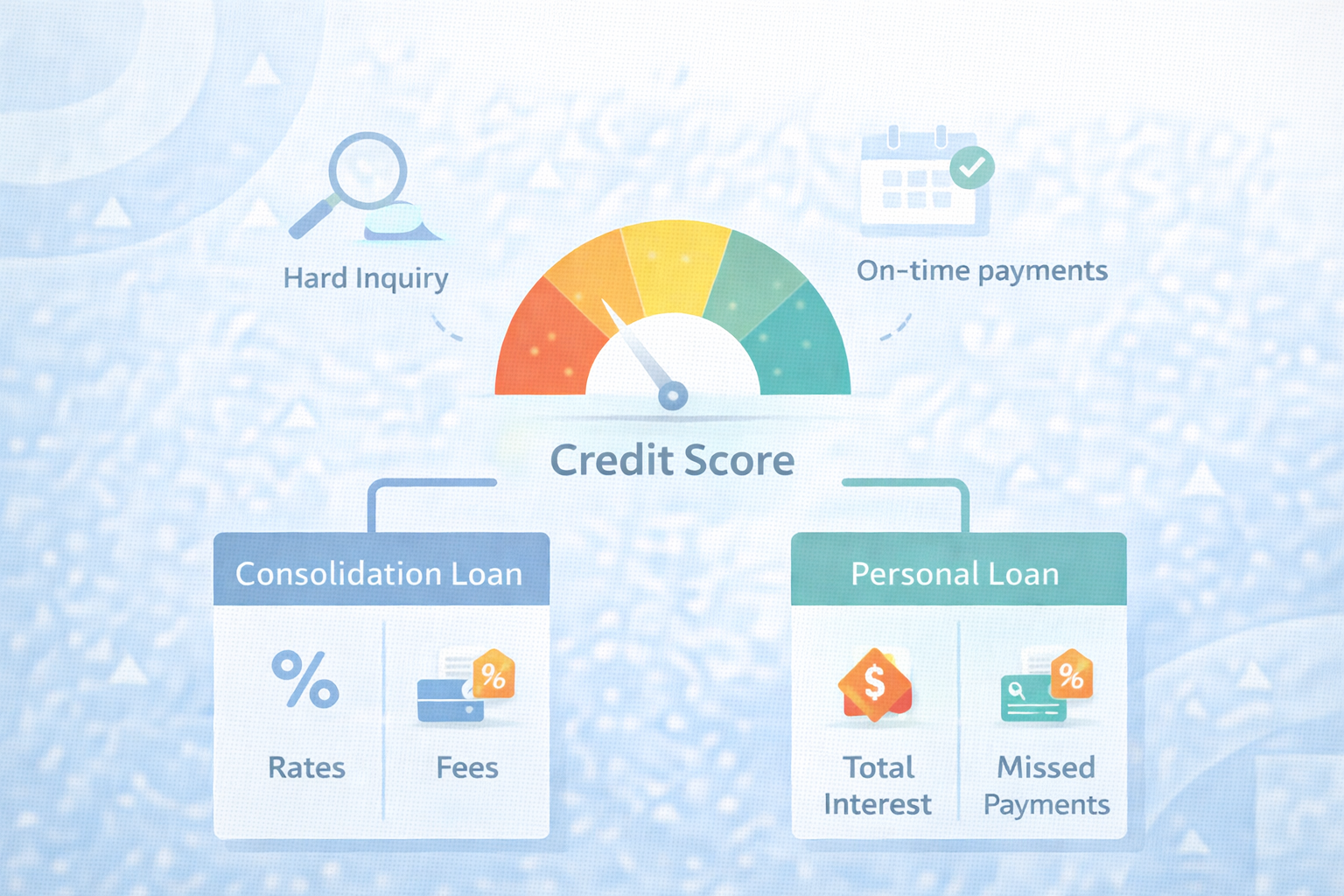
When you first apply, you might see your score drop slightly. Like pruning a tree, you have to snip a small branch now to encourage stronger growth later. This temporary dip occurs because lenders run a hard check on your history to see how debt consolidation affects your credit score, but it typically recovers quickly.

The rebound happens because you are clearing out maxed-out credit cards. Scoring models reward you for having available credit limits that you aren't currently using. By shifting those balances to a single fixed loan, you lower your "utilization rate," signaling to bureaus that you are successfully executing a debt management strategy using personal loans.

Your monthly budget also gets immediate relief. Instead of managing multiple high interest debt payments, you have one fixed bill. This consistency helps stabilize the debt-to-income ratio impact of new loans over time. However, before celebrating the simplicity, ensure the upfront fees don't outweigh the interest savings.

The Hidden Cost of Simplification: Fees and Choosing Your Best Path

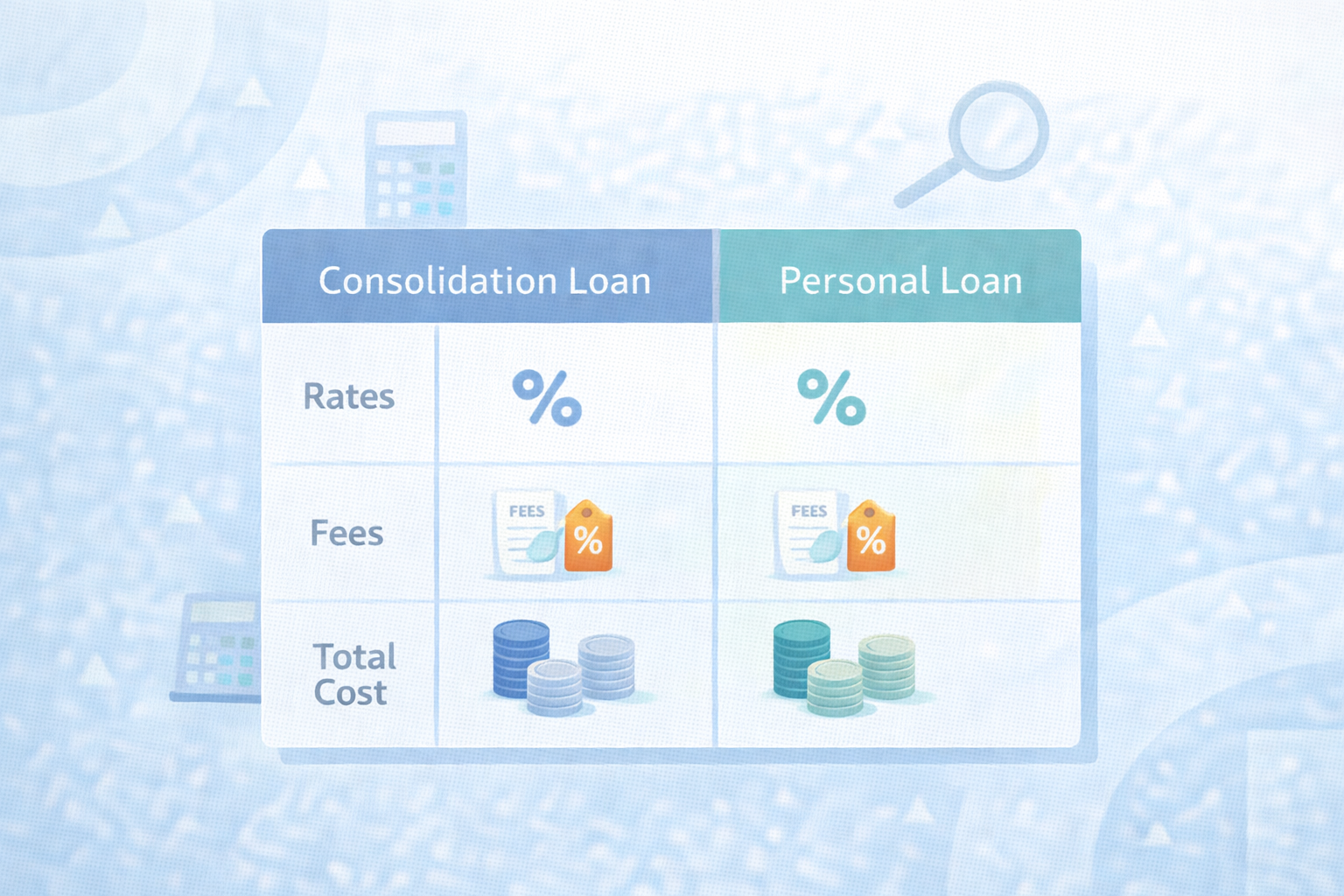
Simplifying payments often involves an "origination fee." Lenders typically deduct 1% to 8% upfront, so a $10,000 loan might only yield $9,200. You must weigh this cost against interest savings to determine if a debt consolidation loan is worth it.

Alternatively, a balance transfer credit card versus a debt consolidation strategy might work better for smaller debts you can pay off quickly. Always verify these details before signing:

  • Net Funding: Ensure personal loan origination fees explained in the fine print don't leave you short.
  • Early Payment: Confirm there are no prepayment penalties.
  • Member Perks: Check credit union personal loan eligibility for lower fees.

Your Debt-Free Roadmap: Three Steps to Choose the Right Loan Today

Regain peace of mind by weighing the pros and cons. Start choosing the best method for paying off high-interest debt:

  1. Total your current balances.
  2. Check pre-qualified rates (soft pull).
  3. Compare the new monthly payment to your current total.

Disclaimer: The information provided in this blog post is for educational and informational purposes only and should not be considered as financial, legal, investment, or tax advice. Symple Lending is not responsible for any financial outcomes resulting from following the information or ideas shared in this blog. Every individual's financial situation is unique, and we strongly encourage readers to take their own circumstances into consideration and consult with a qualified financial, legal, tax, and investment advisor before making any financial decisions. Symple Lending does not provide financial, legal, tax, or investment advice.

Consolidation Loan vs. Personal Loan: What’s the Difference?

Consolidation Loan vs. Personal Loan: What’s the Difference?

If paying bills feels like a game of Whac-A-Mole, you might ask: Consolidation Loan vs. Personal Loan: What’s the Difference? In reality, banks often...

Continue Reading
The Debt Payoff Strategy Financial Planners Recommend That Most People Overlook

The Debt Payoff Strategy Financial Planners Recommend That Most People Overlook

When clients walk into a financial planner’s office carrying $20,000, $30,000, or more in high-interest credit card balances, the advice is rarely...

Continue Reading
7-Day Personal Loan Readiness Plan: A Step-by-Step Prep Guide to Improve Approval Odds

7-Day Personal Loan Readiness Plan: A Step-by-Step Prep Guide to Improve Approval Odds

Applying for a personal loan shouldn't feel like a lottery. Lenders aren't guessing about your financial health, and neither should you. This 7-day...

Continue Reading
Consolidation Loan vs. Personal Loan: Which Is Right for Your Financial Goals?

Consolidation Loan vs. Personal Loan: Which Is Right for Your Financial Goals?

Did you know the average American manages four credit cards, contributing to a total household credit card debt that exceeded $1 trillion in 2023?...

Continue Reading
Debt-to-Income Ratio for Personal Loans: How to Calculate DTI and What “Good” Looks Like

Debt-to-Income Ratio for Personal Loans: How to Calculate DTI and What “Good” Looks Like

Ever applied for a loan and felt like you were just crossing your fingers, hoping for the best? There’s a key number that heavily influences loan...

Continue Reading
From Financial Chaos to Control: How a Fixed Loan Can Transform Your Monthly Budget

From Financial Chaos to Control: How a Fixed Loan Can Transform Your Monthly Budget

Ever wondered what your financial stress is costing you beyond dollars and cents? The average American spends over 2 hours weekly just managing bill...

Continue Reading