How to Lower Your Debt-to-Income Ratio Before Applying for a Loan
Understanding your debt-to-income (DTI) ratio is crucial when applying for a loan. This ratio compares your monthly debt payments to your income....
Whether you're covering unexpected expenses, making a big purchase, or just need extra cash, our personal loans offer simple, flexible funding tailored to your needs.
Simplify your finances with a loan that combines multiple payments into one. Our consolidation loans help reduce stress and keep your budget on track.
Upgrade your living space with financing designed for renovations, repairs, or remodeling. Our home improvement loans help you enhance your home’s comfort, value, and functionality—on your terms.
Explore expert insights, financial tips, and strategic guidance from the Symple Lending team. Our insights and resource articles are your go-to source for empowering content that helps you make informed decisions on your journey to financial freedom.
Stay up-to-date with the latest press releases, media features, and major announcements from Symple Lending. This section showcases how we're making headlines and driving innovation in the lending industry.
2 min read
Breanne Neely
:
February 18, 2026
Understanding your debt-to-income (DTI) ratio is crucial when applying for a loan. This ratio compares your monthly debt payments to your income. Lenders use it to assess your ability to manage payments and repay debts.
A good DTI ratio can improve your chances of loan approval. It can also help you secure better interest rates.
In this guide, we'll explain how to calculate your DTI and offer practical steps to lower it. This will help you prepare for a successful loan application.
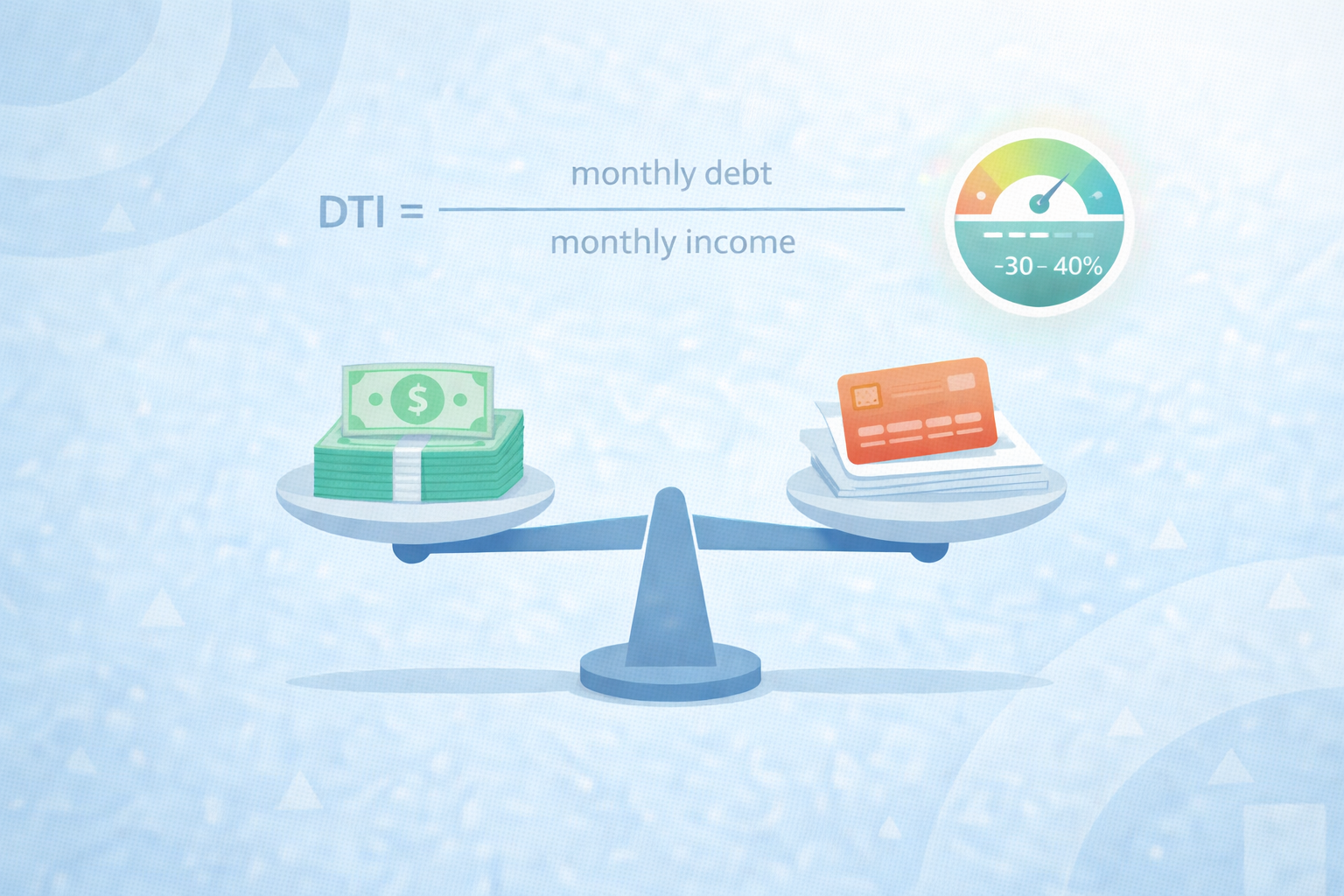
The debt-to-income (DTI) ratio is a financial metric used by lenders. It measures your monthly debt obligations against your gross income. This ratio indicates your ability to manage monthly payments and repay debts.
A high DTI ratio suggests potential risks for lenders. It may signal that you could struggle to handle new debt. Conversely, a lower DTI indicates better financial health.
Here's why the DTI ratio matters:
Lenders assess your DTI ratio to gauge your financial health. They use it to decide if you can handle additional debt responsibly.
A low DTI ratio suggests you are a less risky borrower. This can lead to favorable loan terms and lower interest rates.
Key ways lenders use DTI include:
Calculating your DTI ratio is simple. Start by adding up all your monthly debt payments. This includes credit cards, car loans, student loans, and any other recurring debts.
Next, determine your gross monthly income. This is your total income before taxes and deductions.
Finally, use the formula below:
Regularly checking your DTI ratio helps you understand your financial position. This knowledge can guide adjustments if needed.
Lenders generally prefer a low DTI ratio. A good DTI is usually 36% or lower. Lenders view anything above 43% as risky.
Meeting lender preferences can improve your loan application. Here’s a quick guide:
Lowering your DTI ratio before applying for a loan can boost your chances. Start by reducing monthly debt payments. Pay off credit card balances to decrease outstanding debt.
Another effective strategy is to increase income. Consider taking on a part-time job or gig work. More income helps to improve the ratio by making debt smaller in comparison.
Debt consolidation can also be beneficial. It simplifies monthly payments and may reduce interest rates. Examine all available options to find what works best for you.
Avoid accumulating more debt before applying for a loan. Taking on new liabilities will only worsen your DTI ratio. It's crucial to maintain a stable financial profile.
Regularly review your credit report for errors. Correcting discrepancies can also indirectly enhance your DTI position. Prioritize accuracy in your financial records.
Here are some steps to consider:
Knowing how to manage your DTI ratio can significantly impact your loan approval chances. As you prepare to apply, focus on making financially sound decisions to keep your ratio in check.
For more insights on increasing your loan approval odds, visit Symple Lending's guide. Ready to take the next step? Get Started with Symple Lending today to explore your loan options and improve your financial standing.
Disclaimer: The information provided in this blog post is for educational and informational purposes only and should not be considered as financial, legal, investment, or tax advice. Symple Lending is not responsible for any financial outcomes resulting from following the information or ideas shared in this blog. Every individual's financial situation is unique, and we strongly encourage readers to take their own circumstances into consideration and consult with a qualified financial, legal, tax, and investment advisor before making any financial decisions. Symple Lending does not provide financial, legal, tax, or investment advice.
Understanding your debt-to-income (DTI) ratio is crucial when applying for a loan. This ratio compares your monthly debt payments to your income....
Have you ever stared at your bank account, perplexed by how your seemingly adequate paycheck evaporates so quickly? You’re financially responsible,...
Navigating the world of credit scores can be confusing, especially if you're trying to get your loan approved. Understanding what lenders look for...
Summary: By strategically preparing—optimizing your credit, lowering your debt-to-income ratio, and requesting only what you truly need—you can...
Did you know that 76% of personal loan applications are rejected simply because applicants don't meet basic eligibility requirements? This sobering...