Skip to the main content.

Personal Loans

Whether you're covering unexpected expenses, making a big purchase, or just need extra cash, our personal loans offer simple, flexible funding tailored to your needs.

Learn more...

Consolidation Loans

Simplify your finances with a loan that combines multiple payments into one. Our consolidation loans help reduce stress and keep your budget on track.

Learn more...

Home Improvement Loans

Upgrade your living space with financing designed for renovations, repairs, or remodeling. Our home improvement loans help you enhance your home’s comfort, value, and functionality—on your terms.

Learn more...

Symple Insights

Explore expert insights, financial tips, and strategic guidance from the Symple Lending team. Our insights and resource articles are your go-to source for empowering content that helps you make informed decisions on your journey to financial freedom.

Learn More...

Symple News

Stay up-to-date with the latest press releases, media features, and major announcements from Symple Lending. This section showcases how we're making headlines and driving innovation in the lending industry.

Learn More...

12 min read

Can You Get a Debt Consolidation Loan With a Credit Score Under 600?

Can You Get a Debt Consolidation Loan With a Credit Score Under 600?
23:15

A credit score below 600 can make borrowing more challenging. But it does not necessarily mean a consolidation loan is unavailable. Lenders use different eligibility criteria, and your credit score may be only one part of the picture during underwriting. Your income, existing financial obligations, credit history, and the amount you are requesting may also influence whether you qualify and what terms are offered.

For someone considering consolidation, the more important question is not simply whether you can qualify. It is whether the loan terms you qualify for would actually improve your repayment situation—compared to what you are currently paying across your credit cards.

This article addresses that question directly. It covers how lenders evaluate applications, what loan terms can look like when credit scores are lower, how to compare an offer with your existing debt, and when consolidation may or may not be worth pursuing.

Can You Get a Consolidation Loan With a Credit Score Below 600?

The short answer is that some borrowers with credit scores below 600 may qualify for a consolidation loan—but there is no universal answer.

Different lenders set different eligibility requirements, and those requirements are not always published in full. According to data from Bankrate (2026), some lenders who work with lower credit profiles include Avant, which lists a minimum credit score of 550, and Upstart, which sets no minimum credit score requirement at all and instead evaluates applicants using a broader set of factors such as education and employment history.

A few things are worth clarifying at the outset:

  • "Under 600" is a range, not a single profile. A borrower with a 595 score and steady income is in a very different situation from a borrower with a 520 score and an inconsistent employment history. Lenders may see those applications very differently.
  • There is no credit score at which approval becomes automatic. Even scores above 600 do not guarantee approval, and scores below 600 do not guarantee rejection.
  • Available APRs and loan amounts may differ significantly from what borrowers with higher scores are offered. With credit scores in the bad credit range, some lenders may offer APRs up to 35.99%, according to Bankrate (2026).
  • Approval cannot be promised. Any source that tells you approval is guaranteed deserves additional scrutiny, regardless of your credit score.

Key takeaway: Some lenders work with credit scores below 600, but eligibility, available loan amounts, and APRs vary by lender and by individual financial profile.

Why Your Credit Score Matters to Lenders

Understanding what a credit score represents can help you interpret how lenders use it—and why it matters, without being the only thing that matters.

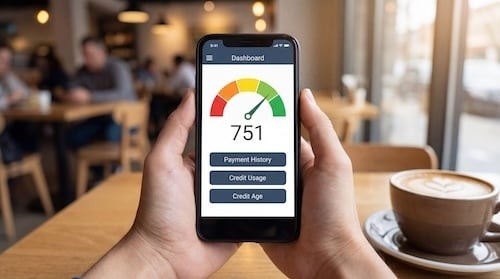
A credit score is a numerical summary of information in your credit report. It helps lenders evaluate the likelihood that you will repay a loan based on how you have managed credit in the past. According to myFICO, a FICO® Score is calculated using five categories of information:

  • Payment history (35%): Whether you have paid past credit accounts on time
  • Credit utilization (30%): How much of your available revolving credit you are currently using
  • Length of credit history (15%): How long your accounts have been open and active
  • New credit (10%): How recently you have applied for or opened new accounts
  • Credit mix (10%): The variety of credit types you currently carry

A lower score does not tell a lender that you are a bad person with your money. It tells them that certain aspects of your credit history—missed payments, high utilization, limited history, or a combination—may indicate a higher level of lending risk. That is the lens through which lenders apply it.

Key takeaway: Your credit score gives lenders a standardized view of your credit history, but it does not capture the complete picture of your financial situation.

What Else May Lenders Consider Besides Your Credit Score?

This is a particularly important point for borrowers who assume that a score below 600 automatically ends the conversation.

Lender underwriting criteria vary, and many lenders evaluate multiple factors when determining whether to approve an application and what terms to offer. The table below outlines what some lenders may review—and why each piece of information matters.

Lenders May Consider

Why It Matters

Credit history

Shows how you have managed credit over time, beyond the summary score itself

Income

Helps evaluate your ability to support consistent monthly loan payments

Existing obligations

Provides context around how much of your income is already committed each month

Debt-to-income ratio

Compares certain monthly obligations with your gross monthly income

Requested loan amount

Influences affordability calculations and underwriting risk

Credit score

Provides a standardized view of aspects of your credit history

Your debt-to-income (DTI) ratio, in particular, is a calculation lenders use to understand how your proposed payment fits alongside your existing financial commitments. A lower DTI—meaning your monthly obligations are a smaller portion of your income—may work in your favor during underwriting, even if your credit score is lower than you would like, and applying with a cosigner who has good credit may improve approval odds.

Key takeaway: A lender may evaluate several parts of your financial profile when determining eligibility and loan terms. Your credit score is one input in that process, not the only one.

How a Lower Credit Score May Affect Your Approval Odds and Loan Options

If you do qualify for a consolidation loan with a credit score below 600, the terms offered may look different from what borrowers with higher scores receive. Setting realistic expectations is a useful part of the decision-making process.

Here is what a lower credit score may mean for your available options:

  • Higher APRs. Lenders managing greater perceived risk typically price that risk into the interest rate. Based on Bankrate data (2026), lenders serving lower credit profiles may offer APRs that reach up to 35.99%—which could exceed what you are currently paying on some credit cards.
  • Lower loan amounts. Some lenders may cap the amount available to borrowers with lower credit scores.
  • Origination fees. Fees can be rolled into the loan balance or deducted from your proceeds. With lower credit, some lenders charge fees up to 12% of the loan total, which meaningfully affects the true cost of borrowing.
  • Shorter or more limited repayment terms. The length of the repayment period affects both your monthly payment and the total interest you pay over time.
  • Fewer lender options. Not every lender works with scores below 600, which may reduce how much you can shop around. In some cases, credit unions may offer more flexible terms than large traditional banks and can be more forgiving for bad credit borrowers.

A secured loan may offer a lower interest rate because collateral reduces lender risk, though interest rates still vary by lender and credit profile.

One point is worth emphasizing here: qualifying for a loan and accepting a loan are two separate decisions. Receiving an offer means a lender is willing to extend credit on their terms—it does not automatically mean those terms improve your financial situation.

Key takeaway: When your credit score is lower, carefully reviewing the full terms of any offer becomes especially important before moving forward.

How to Check Whether You Can Prequalify Before Applying

Before submitting a formal loan application, it is worth understanding the difference between prequalification and a full application—and why that distinction matters for your credit.

Soft credit inquiry vs. hard credit inquiry

When you prequalify with a lender, the lender typically performs a soft credit inquiry to review general information about your credit profile. A soft inquiry does not affect your credit score and is not visible to other lenders.

A full loan application, by contrast, typically involves a hard credit inquiry, which is recorded on your credit report and may affect your score temporarily.

What prequalification can and cannot tell you

Prequalification—when offered—can give you a general sense of whether you might qualify and what rates may be available based on your credit profile. Many online lenders offer these tools, but it is still smart to compare fees carefully and avoid predatory lenders. However, prequalification does not guarantee final approval. Your final offer may differ after the lender completes a full underwriting review.

Before starting the prequalification process, it is worth confirming that the lender uses a soft inquiry at that stage. Not all lenders do, and the distinction is important if you are exploring multiple options at once.

Key takeaway: Where available, soft-credit prequalification may allow you to explore potential loan options without initially affecting your credit score. Always verify which type of inquiry a lender uses before proceeding.

How to Compare a Consolidation Offer With Your Existing Credit Cards

If you receive a loan offer, comparing it carefully with your current credit card situation is one of the most important steps you can take.

According to the Federal Reserve, the average interest rate on a two-year personal loan is 11.40%. The average credit card interest rate, as of May 2026, was 22.15%, according to Forbes. That gap is meaningful—but your individual credit card rates and the specific loan terms you qualify for may differ from those averages.

When reviewing any consolidation offer, consider comparing the following:

  • Your existing credit card APRs versus the proposed loan APR
  • Your current combined monthly payments versus the proposed single monthly payment, since some debt consolidation loans may have lower minimum payments than your current cards, though total cost still needs review
  • Any origination fees or loan costs that may add to the balance or reduce the funds you receive
  • The proposed repayment term and how it affects your total cost over time
  • The total interest you would pay under the new loan versus your current payment trajectory, including overall interest payments

A balance transfer or balance transfer credit cards may offer introductory rates as low as 0% for high interest debt, but factor in any balance transfer fee.

A point that often receives less attention: a lower monthly payment does not necessarily mean a lower total cost. A longer repayment term can reduce your monthly obligation while increasing the total amount of interest paid over the life of the loan. Reviewing both the monthly payment and the total repayment cost gives you a more complete picture, especially if you are only making minimum payments now.

Key takeaway: The value of consolidation depends on the complete loan terms—APR, fees, repayment term, and total cost—not simply on whether you qualify.

When Consolidating Debt With a Credit Score Under 600 May Make Sense

There are situations where consolidation may be worth pursuing even when your credit score is below 600. Reviewing your specific circumstances against these scenarios can help you evaluate whether the timing makes sense.

Consolidation may be worth considering if:

  • The APR on the consolidation loan is meaningfully lower than the APRs on your existing credit cards, helping you pay less interest and save money
  • The monthly payment fits comfortably within your budget without creating additional financial pressure
  • The loan lets you combine balances into one loan with a fixed monthly payment and a clear payoff date
  • Combining your eligible balances simplifies repayment into one monthly payment
  • You have a concrete plan for managing credit card use after consolidation, to avoid accumulating new balances

These are not guarantees of a better outcome—they are indicators that the available terms may support your financial goals and help you pay off your debt sooner.

Key takeaway: Consolidation may be worth considering when the available terms improve your repayment structure and align with your broader financial situation.

When Waiting Could Be Worth Considering

There are also situations where waiting—and taking time to strengthen your financial profile—may result in more favorable options.

It may be worth pausing your application if:

  • The loan APR is similar to or higher than your existing credit card rates, which would reduce the financial benefit of consolidating
  • Origination fees significantly increase the cost of borrowing relative to what you owe
  • The proposed monthly payment is difficult to fit into your budget
  • Recent missed payments or other recent credit events are affecting your eligibility
  • You have a realistic opportunity to improve your credit profile within a defined period before applying

Some homeowners also consider a home equity loan because it may offer a fixed interest rate or lower interest rates, but it puts your property at risk. A 401(k) loan lets you borrow against retirement savings without a credit check, but repayment problems can jeopardize your long-term savings.

Taking time before applying is not a setback. For some borrowers, a few months of consistent financial habits can open up a wider range of lender options and more competitive terms.

Key takeaway: Sometimes strengthening your financial profile before applying may result in more options being available to you later.

Ways to Strengthen Your Credit Profile Before Applying

If you decide that waiting makes sense, there are practical steps you can take during that time. These habits support your credit profile over time, though specific score changes cannot be predicted or guaranteed.

  • Make payments on time. Payment history is the most heavily weighted factor in most credit scoring models, accounting for 35% of a FICO® Score, according to myFICO. Consistent on-time payments can help stabilize and gradually improve your score.
  • Reduce revolving balances where possible. Credit utilization—the percentage of your available revolving credit that you are using—makes up approximately 30% of a FICO® Score. Paying down balances can reduce your utilization ratio.
  • Review your credit reports for inaccurate information. Errors on your credit report can affect your score. You are entitled to a free credit report from each of the three major bureaus annually at AnnualCreditReport.com, which can also help you check your credit health.
  • Avoid unnecessary new credit applications. Each hard inquiry can affect your score temporarily. Applying for unnecessary new credit accounts without a clear purpose while preparing to apply may not support your goal of qualifying for consolidation.
  • Monitor your credit utilization regularly. Keeping your utilization below 30% across revolving accounts is a commonly referenced guideline. Tracking it helps you understand how your current balances affect your score.

Key takeaway: Consistent credit habits may strengthen your financial health over time, which can expand your options when you are ready to apply.

Watch Out for "Guaranteed Approval" Claims

A lower credit score can create financial pressure—and that pressure can make certain marketing language seem more appealing than it should. It is worth understanding what to look for when evaluating lender claims.

Legitimate lenders generally evaluate your credit, income, and financial profile before making a final approval decision. A lender who promises guaranteed approval before reviewing your information is making a claim that warrants a closer look.

Practices that deserve additional scrutiny include:

  • Guaranteed approval language before any application or review has taken place
  • Requests for upfront payment before funds are disbursed
  • APRs or fees that are not clearly stated in writing before you sign
  • Pressure to act quickly without adequate time to review loan documents
  • Terms that change between your initial quote and your final offer without explanation

Reviewing disclosures carefully before signing protects you regardless of your credit score. If something in the loan terms is unclear, asking for clarification before committing is always a reasonable step.

Key takeaway: A lower credit score should not pressure you into accepting a loan offer that you do not fully understand. Taking time to review the terms is part of a sound decision-making process.

Your Next Step With Consolidation

A credit score below 600 may make qualifying for a consolidation loan more challenging, but your score is not necessarily the only factor a lender considers. Income, existing obligations, credit history, requested loan amount, and lender-specific underwriting requirements may all shape what options are available to you.

If you do receive an offer, look beyond approval. Compare the APR, fees, monthly payment, repayment term, and total repayment cost with what you are currently paying across your credit cards. Alternatives to debt consolidation loans include credit counseling and a debt management plan through a nonprofit agency, and nonprofit agencies can help create that structure. Bankruptcy can discharge debts but can severely damage credit scores, so it is usually considered only after reviewing other options. A consolidation loan can provide one fixed payment and a defined payoff timeline—but the terms should support your budget and your broader financial goals before you move forward, and debt settlement may be a separate path in more severe cases.

Understanding your options clearly, and comparing them against your current situation, puts you in a much stronger position to make a decision you can feel confident about while protecting your financial future and working toward a debt free future.

Frequently Asked Questions

Can I Get a Debt Consolidation Loan With a 580 Credit Score?

Some lenders may work with credit scores of 580 or below. According to Bankrate (2026), Avant lists a minimum credit score of 550 and Upstart sets no minimum score requirement, considering factors such as education and employment as part of the application. Qualification also depends on income, debt-to-income ratio, and the loan amount requested. A 580 score does not automatically disqualify you, but the available terms may reflect the level of risk a lender associates with a lower credit profile.

What Credit Score Is Needed to Qualify for a Consolidation Loan?

There is no single minimum credit score that applies across all lenders. Some lenders set their minimum at 600, others at 550, and some—like Upstart—set no credit score minimum at all, evaluating applicants through a broader set of criteria. Lender requirements vary, and eligibility also depends on factors beyond your credit score, including income, debt-to-income ratio, and requested loan amount.

Can I Consolidate Credit Card Debt With Bad Credit?

Some borrowers with bad credit—defined by FICO as a score below 580—may be able to qualify for a consolidation loan through certain lenders, using a single loan to combine multiple debts or other debt into one payment structure. However, available APRs may be higher, loan amounts may be limited, and origination fees may add to the total cost. Before consolidating, it is important to compare the full cost of the new loan with your current credit card repayment trajectory to determine whether the terms actually reduce your total interest paid and help you manage debt faster than current minimum-payment patterns.

Does Prequalifying for a Consolidation Loan Hurt My Credit?

Prequalification typically involves a soft credit inquiry, which does not affect your credit score and is not visible to other lenders. A hard credit inquiry—which is recorded on your credit report and may affect your score temporarily—generally occurs when you submit a formal loan application. Before starting the prequalification process with any lender, confirm which type of inquiry is used at each stage.

Will a Consolidation Loan Improve My Credit Score?

A consolidation loan does not directly raise your credit score, but certain outcomes associated with it may support your credit profile over time. Paying on time consistently improves payment history, which is the most heavily weighted factor in most scoring models. Paying off revolving credit card balances may also reduce your credit utilization ratio. That said, opening a new loan may temporarily lower your score due to the hard inquiry and the reduction in your average account age. Any credit score effects will depend on your specific profile and payment behavior.

Should I Consolidate If the New Interest Rate Is High?

Not necessarily. The primary financial benefit of consolidation is typically a lower APR relative to your existing credit card rates. If the consolidation loan APR is similar to or higher than your current credit card APRs, consolidating may not reduce your interest payments or help you pay less interest overall—even if it simplifies your monthly payments. Before accepting any offer, compare the total repayment cost of the new loan against your current payment path to determine whether consolidation provides a meaningful financial benefit in your situation. Some borrowers also compare a balance transfer card for current debt before choosing a high-rate loan.

Disclaimer: The information provided in this blog post is for educational and informational purposes only and should not be considered as financial, legal, investment, or tax advice. Symple Lending is not responsible for any financial outcomes resulting from following the information or ideas shared in this blog. Every individual's financial situation is unique, and we strongly encourage readers to take their own circumstances into consideration and consult with a qualified financial, legal, tax, and investment advisor before making any financial decisions. Symple Lending does not provide financial, legal, tax, or investment advice.

Can You Get a Debt Consolidation Loan With a Credit Score Under 600?

Can You Get a Debt Consolidation Loan With a Credit Score Under 600?

A credit score below 600 can make borrowing more challenging. But it does not necessarily mean a consolidation loan is unavailable. Lenders use...

Continue Reading
Will a Personal Loan Hurt Your Credit Score? (The Real Answer)

Will a Personal Loan Hurt Your Credit Score? (The Real Answer)

A personal loan can temporarily ding your score—but used the right way, it can also help. If you’re asking “Will a Personal Loan Hurt Your Credit...

Continue Reading
Debt Consolidation for Credit Card Debt Over $20,000: What to Know Before You Decide

Debt Consolidation for Credit Card Debt Over $20,000: What to Know Before You Decide

Managing more than $20,000 across several credit cards can become increasingly difficult over time. Each account carries its own APR, its own minimum...

Continue Reading