Skip to the main content.

Personal Loans

Whether you're covering unexpected expenses, making a big purchase, or just need extra cash, our personal loans offer simple, flexible funding tailored to your needs.

Learn more...

Consolidation Loans

Simplify your finances with a loan that combines multiple payments into one. Our consolidation loans help reduce stress and keep your budget on track.

Learn more...

Home Improvement Loans

Upgrade your living space with financing designed for renovations, repairs, or remodeling. Our home improvement loans help you enhance your home’s comfort, value, and functionality—on your terms.

Learn more...

Symple Insights

Explore expert insights, financial tips, and strategic guidance from the Symple Lending team. Our insights and resource articles are your go-to source for empowering content that helps you make informed decisions on your journey to financial freedom.

Learn More...

Symple News

Stay up-to-date with the latest press releases, media features, and major announcements from Symple Lending. This section showcases how we're making headlines and driving innovation in the lending industry.

Learn More...

9 min read

Your Complete Financial Reset Guide for 2026: Transform Your Money Mindset in 5 Simple Steps

Your Complete Financial Reset Guide for 2026: Transform Your Money Mindset in 5 Simple Steps
Your Complete Financial Reset Guide for 2026
18:36

Did you know that a majority of Americans report feeling stressed about money at least once a month? As we approach 2026, a financial reset isn’t just timely, it’s essential for navigating an increasingly complex economic landscape. The new year is often seen as the perfect time to reflect on personal finances and set new financial intentions.

There is no perfect time to start improving your personal finances, but the new year offers a natural opportunity. A financial reset isn’t about perfect budgeting or drastic lifestyle changes. It’s about realigning your money with your values and creating sustainable systems that work specifically for you. With the right approach, 2026 can be the year you transform financial anxiety into confidence and clarity.

The Importance of a Financial Reset in 2026

Giving your finances a reset isn’t just about numbers, it’s about peace of mind. A thoughtful money reset reduces anxiety by creating structure and improving your sense of control over your financial situation. When you have fewer “unknowns” about bills, debt, and savings, your stress levels naturally decrease. Before making changes, take a moment to reflect on your current financial habits and mindset to gain clarity on what needs adjustment.

Creating a clear financial roadmap helps you align your day-to-day actions with your long-term goals. You’ll know exactly where your accounts stand and what you’re working toward.

Remember that effective planning beats “fresh start” fantasies every time. Sustainable change comes from building realistic habits, not from extreme restrictions that you can’t maintain. A true financial reset isn’t about starting from zero; it’s about realigning your money with your values and your current life season.Transform Money Mindset

Step 1: Honest Financial Reflection From 2025

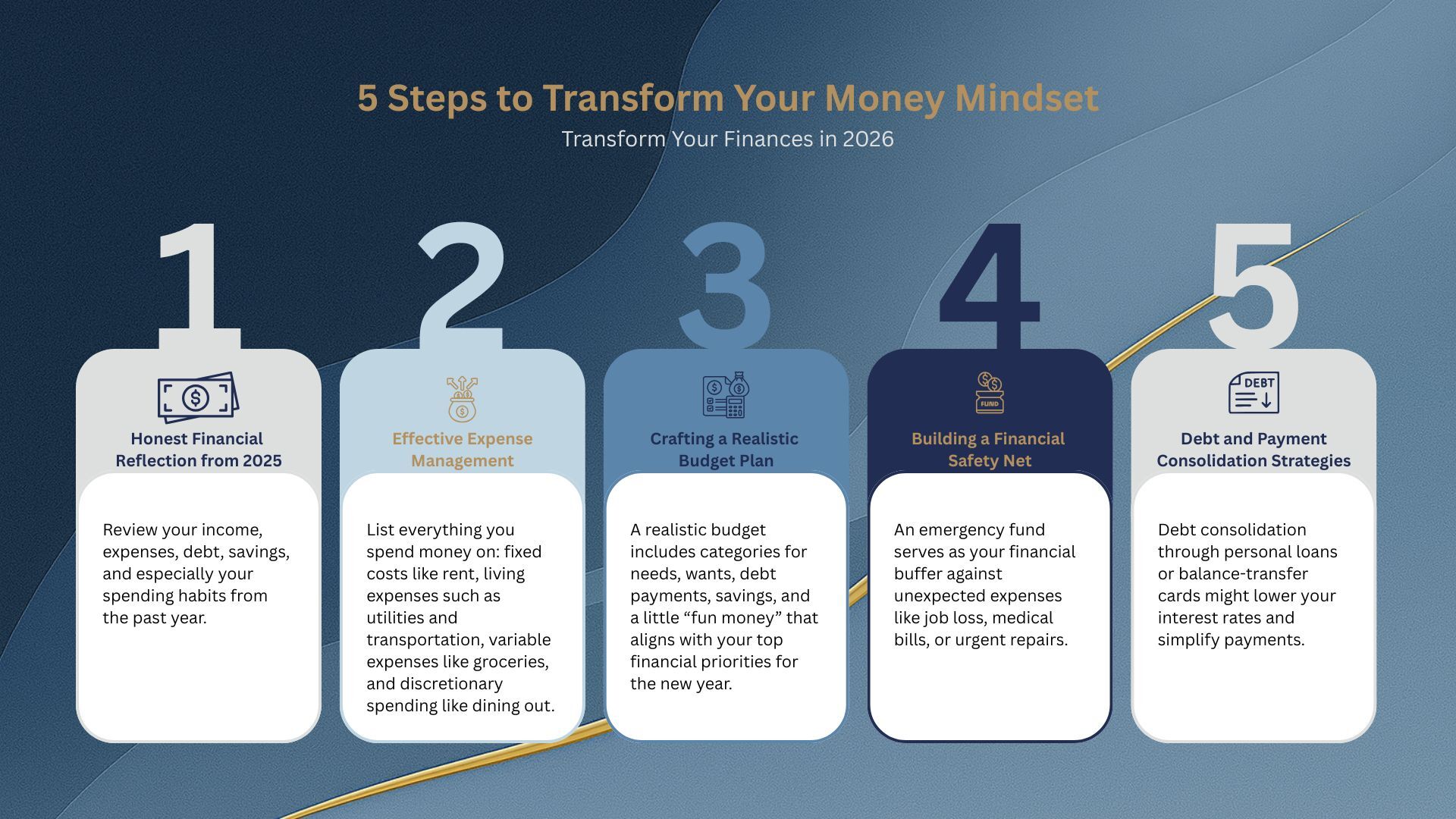
Looking back at your 2025 finances doesn’t need to be painful. Review your income, expenses, debt, savings, and especially your spending habits from the past year as a data-gathering exercise rather than a judgment session. This helps you spot patterns without shame, whether it’s emotional spending, lifestyle creep, or inconsistent bill payments.

Reflect on how your spending habits have changed over the past year. Understanding these shifts can reveal the impact of daily purchases and help you make informed decisions for your financial reset.

Take time to clarify what money truly means to you. Is it security? Freedom? The ability to be generous? Define what “financial peace” looks like in your life, whether that’s having no credit card debt, maintaining a solid emergency fund, or simply staying on top of bills.

Turn these insights into 2-3 specific priorities for 2026, such as “build a $1,000 starter emergency fund,” “pay off one credit card,” or “track every expense for 90 days.” Concrete goals create momentum for your financial journey.

Step 2: Effective Expense Management

Start your expense management by listing everything you spend money on: fixed costs like rent, living expenses such as utilities and transportation, variable expenses like groceries, and discretionary spending like dining out. This complete picture reveals where your money actually goes each month.

Pay attention to “money leaks,” or those recurring small costs that provide little value but add up quickly. These often include unused subscriptions, bank fees, frequent takeout, and convenience purchases. Trimming these can free up cash without major lifestyle changes. With rising costs affecting everything from groceries to utilities, it's even more important to regularly review and adjust your spending to stay on track.

Quick wins to consider:

  • Cancel or downgrade streaming services you rarely use
  • Call providers to renegotiate internet, phone, and insurance bills
  • Adjust payment dates to avoid late fees

Try implementing simple spending guidelines, like waiting 24 hours before purchases over a certain amount or setting a weekly limit on eating out. Make sure your purchases are things you can truly afford. Track your progress using bank-integrated tools, spreadsheet templates, or apps that categorize transactions automatically.

Step 3: Crafting a Realistic Budget Plan

Finding a budgeting method that works for you is essential. The 50/30/20 rule (50% needs, 30% wants, 20% saving/debt payoff) offers simplicity, while zero-based budgeting gives every dollar a specific job. A good budget helps you manage your cash flow effectively, ensuring you have enough for expenses and savings. Choose what fits your personal style.

Remember that too-strict budgets often fail. Allow room for small joys and flexibility. A realistic budget includes categories for needs, wants, debt payments, savings, and a little “fun money” that aligns with your top financial priorities for the new year. Setting clear savings goals, such as building an emergency fund or saving for holidays, can help keep you motivated and focused.

Set up automatic transfers for savings, bill payments, and debt reduction to minimize missed payments and decision fatigue. Consider using direct deposit to automatically fund your savings goals, making consistent saving effortless. These automatic systems work silently in the background while you focus on other aspects of your financial reset.

Consider scheduling regular “money meetings” with yourself (or your partner) to review your budget, check progress, and adjust categories as needed. These check-ins keep your 2026 financial plan on track throughout the year.

Step 4: Building a Financial Safety Net

An emergency fund serves as your financial buffer against unexpected expenses like job loss, medical bills, or urgent repairs. Start with a modest goal if you’re new to saving:

  • Starter goal: $500-$1,000 in emergency funds
  • Next level: 1-3 months of essential living expenses
  • Long-term target: Enough funds to cover three to six months of living expenses, or more, based on your job stability

Small but consistent actions build a safety net faster than you might think. Try:

  • Setting up automatic transfers of just $5-$10 weekly
  • Using round-up savings features on purchases
  • Saving a portion of any raises or tax refunds instead of increasing your spending

Keep your emergency funds in a high yield savings account or money market account; they’re liquid but separate from your checking account. This separation helps prevent dipping into your safety fund for non-emergencies.

Remember to complement your savings with basic insurance protection (health, home/renters, auto) to prevent a single event from wiping out everything you’ve worked to build as part of your savings strategy.

Step 5: Debt and Payment Consolidation Strategies

Start by creating a complete debt list that includes every creditor, balance, interest rate, minimum payment, and due date. This overview helps you see exactly what you’re dealing with and plan your approach. Approach your personal finances with the same discipline and structure as a business: track your cash flow, monitor expenses, and set clear financial goals to stay on course.

Consider these common payoff methods:

  • Debt snowball: Pay the smallest balances first for quick wins and motivation
  • Debt avalanche: Target highest-interest debts first to minimize total interest
  • Hybrid approach: Combine both based on your emotional needs and math

Debt consolidation through personal loans or balance-transfer cards might lower your interest rates and simplify payments. However, watch out for fees, temporary rates, and the risk of running up new balances on cleared cards.

Set up automatic payments at minimum for the smallest required amounts to prevent late fees. Schedule extra payments right after payday to accelerate your progress and avoid spending that money elsewhere. Implementing these strategies can help you manage your debt more effectively and make smarter decisions about debt repayment.

Making Financial Resolutions That Stick

Transforming your financial resolutions into lasting habits isn't about willpower, it's about architecting your success from the ground up. Start by laser-focusing on the financial battlegrounds where you crave transformation; perhaps it's building that wealth cushion month after month, mastering the art of intentional spending, or delivering a knockout punch to your debt monster. Once you've pinpointed these financial pressure points, craft a spending blueprint that champions your financial goals and mirrors your deepest values.

Think of automation as your financial autopilot: set up those savings transfers and bill payments to happen without your brain even getting involved, eliminating the dangerous temptation to spend before you stash. Make it a ritual to peek under the hood of your progress regularly, and don't fear pivoting your strategy when life throws you that inevitable financial curveball. When you need that extra motivation, a financial advisor or even a trusted accountability partner can become your secret weapon for staying laser-focused and building financial confidence.

Here's the game-changer: celebrate those micro-victories. Every single step forward builds unstoppable momentum toward your financial future. By crafting thoughtful financial resolutions and sticking to them like glue, you'll generate serious financial momentum, slash your money stress, and construct a rock-solid financial foundation that'll serve you for years to come.

Creating Your Personal 2026 Financial Roadmap

Turn your financial intentions into action by setting specific, measurable goals. Instead of “save more,” try “save $1,200 by December 2026.” This clarity makes your financial reset concrete and trackable.

Break large annual targets into smaller steps; that $1,200 goal becomes $100 monthly or just $25 weekly. These bite-sized actions feel more manageable and help maintain momentum. Alongside your main annual targets, set short-term goals (like saving for a vacation or a new laptop) and other goals that support your broader financial well-being. Tracking progress toward these diverse goals helps you stay motivated and accountable throughout the year.

Create a simple one-page spending plan summarizing:

  • Your top 2-3 financial priorities for 2026
  • Monthly saving and debt payment targets, with a focus on tracking regular contributions toward these goals
  • Important dates for bills and financial reviews
  • Personal money rules (like no-spend days)

Visual tracking tools make progress tangible. Try a savings thermometer chart on your fridge, a debt paydown tracker in your planner, or a habit calendar for checking accounts weekly. Seeing your progress builds motivation and makes your 2026 financial reset feel rewarding, even during challenging months.

Maintaining Financial Resilience Throughout 2026

Building a calmer relationship with money is just as important as the numbers. View financial management as a skill you can learn rather than a fixed trait or moral judgment about yourself. When setbacks happen, treat them as feedback instead of failure. Ask “What can I adjust?” rather than “Why am I bad with money?”

To manage money anxiety, try:

  • Limiting exposure to alarming financial news
  • Setting up weekly check-ins to replace avoidance with action
  • Talking with a family member or trusted friend about money concerns

Don’t overlook the power of celebrating small wins. Sticking to your grocery budget for a week or reaching a mini-savings milestone deserves recognition and helps reinforce positive habits.

Consider adopting a monthly reflection ritual as part of your financial reset journey. Take time to review your numbers, update goals, think about what felt challenging or easy, and adjust next month’s plan accordingly. If appropriate, involve your family in this monthly financial reflection to encourage shared responsibility and support.

Reviewing and Adjusting Your Plan Throughout the Year

Did you know that most people treat financial planning like a one-time New Year's resolution, setting it up once and then letting it gather dust? But here's the thing: your financial plan isn't a "set it and forget it" crockpot meal, it's more like tending a garden that needs regular attention to truly flourish. Smart money moves happen when you carve out time every quarter to dive into your financial goals, emergency account, income, expenses, savings, and investments. Life loves throwing curveballs, whether it's a career change, those sneaky unexpected expenses, or economic shifts that shake things up, so staying flexible and proactive isn't just smart, it's essential.

During these financial check-ins, you'll want to hunt for those golden opportunities where small adjustments can make a big difference. Maybe it's time to bump up your savings rate, give your investment portfolio a little rebalancing love, or fine-tune your tax strategy. A financial advisor can be your secret weapon here, helping you navigate the investment waters, optimize your tax game plan, and keep you cruising toward those retirement dreams and other big-picture goals. Think of them as a financial tool, helping you avoid costly detours and keeping you on the smartest route to your destination.

Staying plugged into personal finance knowledge and actively managing your plan is like having a financial shield; it helps you dodge those money pitfalls that can derail your progress and keeps you moving toward real success. Be patient with yourself...financial planning is all about progress, not perfection. Nobody's expecting you to have it all figured out overnight! By consistently reviewing and tweaking your plan throughout the year, you'll build that financial resilience that helps you weather any storm, crush your goals, and create the money life that actually fits your dreams. Your future self will definitely thank you for these smart moves.

Practical Tools and Continuous Use of the Guide

Your 2026 financial reset becomes easier with the right tools at hand. Consider using:

  • Reflection worksheets with prompts about last year’s wins, challenges, and spending patterns
  • Expense checklists that capture all your recurring and irregular costs
  • Budget templates formatted for 50/30/20, zero-based, or envelope-style planning
  • Debt trackers and savings goal worksheets to visualize progress

Remember that your financial reset isn’t just a January project. The real benefits come from applying these principles consistently throughout the year. Set calendar reminders to review your plan quarterly to stay on track.

Sometimes professional guidance makes sense, particularly when debt feels overwhelming, you’re facing major life events like retirement, or you need specialized tax or investment advice. A financial planner or credit counselor can provide tailored direction for your specific situation within your financial reset journey. Consider consulting a tax advisor for tax planning and to understand the benefits of contributing to an individual retirement account as part of your long-term wealth-building strategy. When evaluating investment options, remember that past performance is not indicative of future results, and it’s important to consider the uncertainty of future investment returns.

Building Momentum and Sustaining Optimism

Taking just one small step today can break through financial inertia. Setting savings and spending resolutions can help you stay focused on your year's financial resolutions, making it easier to build momentum and achieve your goals. Start with something simple like checking account balances, canceling an unused subscription, or setting up a $10 weekly transfer to savings.

Quick actions that create forward motion include:

  • Creating a simple spending log for the next 7 days
  • Adding a money check-in to your calendar
  • Setting up alerts for low balances or large transactions
  • Moving a small amount into a separate savings account

Your 2026 financial reset doesn’t require dramatic overnight changes. Clarity combined with consistent small actions leads to greater financial peace than short-lived, intense efforts. Financial improvement is rarely a straight line; progress comes from showing up regularly and making adjustments as needed.

When you hit obstacles, revisit your vision for the year and remind yourself that each small step compounds over time. Financial stability grows gradually through persistence, not perfection.

Your First Step Forward

Financial resets aren't about perfection, they're about progress. The most powerful thing you can do today is simply begin. Choose one small action from this guide, whether it's listing your expenses or setting up a $5 weekly savings transfer, and take that first step.

Remember that financial wellness, like any other form of self-care, comes from consistent habits rather than occasional grand gestures. As you move through 2026, be patient with yourself, celebrate each milestone, and trust that these intentional adjustments are gradually building the financial peace you deserve.

Disclaimer: The information provided in this blog post is for educational and informational purposes only and should not be considered as financial, legal, investment, or tax advice. Symple Lending is not responsible for any financial outcomes resulting from following the information or ideas shared in this blog.  Every individual's financial situation is unique, and we strongly encourage readers to take their own circumstances into consideration and consult with a qualified financial, legal, tax, and investment advisor before making any financial decisions. Symple Lending does not provide financial, legal, tax, or investment advice.

Your Complete Financial Reset Guide for 2026: Transform Your Money Mindset in 5 Simple Steps

Your Complete Financial Reset Guide for 2026: Transform Your Money Mindset in 5 Simple Steps

Did you know that a majority of Americans report feeling stressed about money at least once a month? As we approach 2026, a financial reset isn’t...

Continue Reading
Smart Money Moves: When Does Borrowing for Seasonal Expenses Make Financial Sense?

Smart Money Moves: When Does Borrowing for Seasonal Expenses Make Financial Sense?

Did you know that the average American plans to spend over $800 on holiday gifts alone this year, despite nearly half of households reporting worse...

Continue Reading
Practical Strategies for How to Avoid Financial Stress During the Holidays

Practical Strategies for How to Avoid Financial Stress During the Holidays

Ever noticed how the "most wonderful time of the year" often coincides with your most worrisome financial moments? Nearly 70% of Americans experience...

Continue Reading
Practical Strategies for How to Avoid Financial Stress During the Holidays

Practical Strategies for How to Avoid Financial Stress During the Holidays

Ever noticed how the "most wonderful time of the year" often coincides with your most worrisome financial moments? Nearly 70% of Americans experience...

Continue Reading
9 Last-Minute Holiday Budgeting Hacks That Actually Work

9 Last-Minute Holiday Budgeting Hacks That Actually Work

Ever find yourself staring at your calendar in mid-December, wondering how the holidays snuck up so quickly? While everyone else seems to have their...

Continue Reading
How to Set Financial Resolutions That Actually Stick: Your Blueprint for Success

How to Set Financial Resolutions That Actually Stick: Your Blueprint for Success

Did you know that a majority of financial resolutions are abandoned by mid-February? It’s a startling statistic that reveals a crucial truth: the...

Continue Reading