Debt Consolidation for Multiple Accounts: What To Do When You Have 10+ Accounts
When you carry balances across 10 or more credit card accounts, the challenge isn't just how much you owe—it's how difficult the repayment structure...
Whether you're covering unexpected expenses, making a big purchase, or just need extra cash, our personal loans offer simple, flexible funding tailored to your needs.
Simplify your finances with a loan that combines multiple payments into one. Our consolidation loans help reduce stress and keep your budget on track.
Upgrade your living space with financing designed for renovations, repairs, or remodeling. Our home improvement loans help you enhance your home’s comfort, value, and functionality—on your terms.
Explore expert insights, financial tips, and strategic guidance from the Symple Lending team. Our insights and resource articles are your go-to source for empowering content that helps you make informed decisions on your journey to financial freedom.
Stay up-to-date with the latest press releases, media features, and major announcements from Symple Lending. This section showcases how we're making headlines and driving innovation in the lending industry.
13 min read
Breanne Neely
:
August 26, 2026
Table of Contents
When you carry balances across 10 or more credit card accounts, the challenge isn't just how much you owe—it's how difficult the repayment structure becomes to manage. Debt consolidation for multiple accounts may allow qualified borrowers to replace several eligible credit card balances with one fixed-rate installment loan, one monthly payment, and one defined repayment timeline.
Managing one or two credit card accounts can be relatively straightforward. Managing 10 or more is a different situation. Each account comes with its own balance, APR, minimum payment, and due date. Even when you're making every required payment on time, the sheer number of accounts can make budgeting harder, progress less visible, and the overall repayment structure more difficult to organize.
That complexity is often what brings people to this topic. It's not always about the total amount owed. It's about how many moving parts you're managing at once, and how difficult it can be to feel like you're actually making headway when your attention is spread across a dozen accounts.
This article focuses on what debt consolidation for multiple accounts looks like in practice. It walks through how to take inventory of your accounts, what the structure of a consolidation loan looks like, and what to consider before deciding whether it makes sense for your situation. No assumptions are made about whether a loan will be cheaper. The goal is to help you understand your options clearly so you can evaluate them with confidence.
The challenge with managing many accounts is not just financial—it's organizational. Each credit card account adds another layer of complexity to your monthly obligations.
When you're managing 10 or more accounts, you're likely dealing with all of the following at the same time:
It's worth noting that having 10 accounts does not reflect poor financial judgment. Balances can accumulate across many accounts for any number of reasons, including life events, job transitions, or periods when credit cards were the only available resource. The number of accounts matters here because of how it affects your ability to manage repayment—not because it says anything about the choices that led to it.
The number of accounts you manage can add complexity even when you're consistently making your required payments on time.
Before evaluating any repayment option, it's useful to see all of your accounts together in one place. This gives you a clear picture of where you stand and what you're actually working with.
For each account, collect the following information:
|
Account |
Balance |
Credit Limit |
APR |
Minimum Payment |
Due Date |
Status |
|
Card 1 |
$4,200 |
$6,000 |
26% |
$126 |
3rd |
Current |
|
Card 2 |
$3,100 |
$5,000 |
24% |
$93 |
6th |
Current |
|
Card 3 |
$2,800 |
$4,500 |
28% |
$84 |
9th |
Current |
|
Card 4 |
$5,000 |
$7,500 |
25% |
$150 |
11th |
Current |
|
Card 5 |
$1,900 |
$3,000 |
29% |
$57 |
14th |
Current |
|
Card 6 |
$3,700 |
$5,500 |
23% |
$111 |
17th |
Current |
|
Card 7 |
$2,400 |
$4,000 |
27% |
$72 |
19th |
Current |
|
Card 8 |
$1,600 |
$2,500 |
25% |
$48 |
22nd |
Current |
|
Card 9 |
$3,300 |
$5,000 |
26% |
$99 |
25th |
Current |
|
Card 10 |
$2,000 |
$3,500 |
24% |
$60 |
28th |
Current |
|
Total |
$30,000 |
— |
— |
$900 |
10 dates |
— |
Illustrative example only. Your balances, APRs, and minimum payments will differ.
Once you've completed your own version of this table, calculate a few summary figures:
That summary gives you the starting point for any meaningful comparison. Seeing all of your accounts together provides the information you need to evaluate your repayment options accurately.
Total balance is an important number, but it's not the complete picture. Two borrowers might each owe $30,000 in credit card debt. One might carry that balance across three accounts. The other might carry it across 12.
The second borrower isn't necessarily in a worse financial position overall—but their repayment situation is more complicated in several specific ways:
This is why an article focused on account complexity is meaningfully different from one focused only on balance size. Your total balance matters, but the number and structure of your accounts also influence how manageable repayment feels—and how difficult it is to stay organized.
Debt consolidation for multiple accounts typically involves using a fixed-rate personal loan to pay off eligible credit card balances. The loan proceeds are applied to those accounts, and you then repay the personal loan through a single monthly installment.
Here is how that process generally works:
The result, for qualified borrowers, looks like this:
After Eligible Balances Are Consolidated:
1 loan → 1 fixed payment → 1 due date → 1 defined repayment timeline
That structural change is the core benefit of consolidation for someone managing many accounts. It's not necessarily about paying less—it's about replacing a complicated collection of revolving payments with a more predictable repayment structure and a single payment.
The exact number and types of accounts eligible for consolidation depend on the lender and the loan terms. Consolidation may allow qualified borrowers to replace several eligible credit card balances with one structured repayment obligation under one loan.
No. A debt consolidation loan is typically a fixed-rate personal loan, but it doesn't have to include every account you carry, and in many cases, including every account may not be the right choice.
A few reasons you might consolidate only a portion of your accounts:
The goal isn't necessarily to combine everything into just one monthly payment. The goal is to determine which eligible balances make financial sense to include, so you repay one loan as a single loan with a single payment each month, based on your loan terms and your overall repayment plan.
This is one of the most important steps in evaluating whether consolidation is right for your situation. You do not have to use the same consolidation option for every balance when you consolidate debt. Fewer payments alone do not make a loan financially beneficial. The terms of the loan still need to make sense relative to what you're currently managing.
Before making any decision, calculate your current baseline:
Then, for any loan you're evaluating, review the following:
According to the Federal Reserve, the average credit card interest rate on accounts with balances assessed interest was 21.52% as of February 2026. If a personal loan offers a meaningfully lower fixed interest rate, the total cost comparison may favor consolidation and help you pay less interest over time. Borrowers with good credit may qualify for more favorable terms, while those with bad credit may see fewer options or higher rates, whether they apply through banks, credit unions, or online lenders. However, a longer loan term can sometimes offset interest rate savings by extending the repayment period—so reviewing both the monthly payment and the total cost is important.
Simplification is valuable, but the loan terms still need to make sense when compared with your existing accounts. Including the wrong balances or continuing to borrow afterward can leave you with more debt overall.
For borrowers who qualify for favorable loan terms, consolidating multiple credit card accounts into one installment loan can offer several practical organizational benefits, whether the loan comes from banks, online lenders, or credit unions:
When reviewing loan offers for credit card consolidation, compare the APR carefully: a fixed interest rate makes side-by-side comparison easier, and whether you actually pay less interest depends on the APR you qualify for. Also review the monthly payment closely, since some loans may lower your payment and offer lower minimum payments, but extending the term can increase the total amount paid over time.
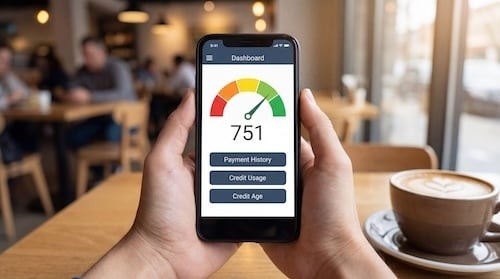
Borrowers with good credit generally receive better loan terms, and securing a low-interest consolidation loan often requires good to excellent credit; borrowers with scores of 740 or higher typically receive the best rates. Borrowers with bad credit may still find offers, but often at higher rates that can reduce or eliminate savings on interest payments.
These benefits are structural. They address the organizational complexity that comes with managing many accounts—not just the financial cost of carrying high-interest debt. One predictable payment may make a complex repayment schedule easier to organize, track, and sustain over time, which can help some borrowers pay off debt faster and eventually become debt free.
Consolidating multiple credit card accounts into one installment loan can affect several credit score factors. The outcome will depend on your existing credit profile and how you manage your accounts after consolidation. Some borrowers compare this with credit card refinancing through a balance transfer card, but those offers usually require good to excellent credit, involve opening new credit accounts, and only keep 0% APR during a limited promotional period or introductory period.
Here is how each major FICO scoring category may be affected, according to myFICO:
Consolidating multiple accounts may affect several credit factors, so short- and long-term outcomes depend on your broader credit profile and how you manage your accounts going forward. In some cases, a lower-cost loan structure may help you pay off debt sooner, though savings are not guaranteed.
Paying off a credit card through a consolidation loan does not automatically close that account. What you do with the accounts afterward is a separate decision—one that carries its own financial considerations.
A few things to understand about your accounts after consolidation:
Consolidation changes your balances, but you'll still need a clear plan for how you manage those accounts responsibly once they've been paid off.
This is one of the most important long-term considerations in any consolidation decision. A personal loan provides a structured repayment path, but maintaining that structure over time depends on the financial habits you develop alongside it.
Several steps can help you avoid rebuilding balances after consolidating:
Consolidation creates a new repayment structure, but long-term success depends on the financial habits and spending awareness that follow.
Consolidation is not the right choice for every borrower or every situation. It may be worth evaluating more closely when a few specific conditions apply.
Consider comparing your options when:
Consolidation is most useful when it improves the structure of your repayment and supports a sustainable financial plan over the long term.
It may be possible to consolidate 10 or more credit card accounts into a single personal loan, depending on the loan amount you qualify for and whether the balances on those accounts fall within that amount. Lender eligibility requirements vary, and the total balance across your accounts, your credit profile, and your income will all factor into the loan terms you're offered.
Lenders do not typically set a specific limit on the number of accounts you can consolidate. What matters is the total balance you're requesting to cover and whether you qualify for a loan in that amount. If your total balance across all accounts exceeds what a lender is willing to offer, you may consolidate a portion of your accounts and manage the remainder separately.
No. You can choose which accounts to include in a consolidation. Some accounts may carry lower APRs that make them less urgent to consolidate. Others may have balances that fall outside the loan amount you qualify for. Evaluating each account individually—by balance, APR, and payment status—can help you decide which ones to include.
Paying off a credit card through a consolidation loan does not close the account. The account remains open unless you request that it be closed. Whether to keep accounts open or close them depends on your individual circumstances, including how the decision may affect your credit utilization ratio and your ability to avoid accumulating new balances.
Consolidation can affect your credit score across several categories, including payment history, credit utilization, length of credit history, credit mix, and new credit inquiries. According to myFICO, paying down revolving credit card balances can lower your utilization ratio, which may improve your score. Opening a new installment loan may temporarily reduce your score due to the hard inquiry and the lower average age of accounts. Outcomes vary depending on your overall credit profile and how you manage your accounts after consolidation.
There is no single answer that applies to every situation. Paying accounts off individually—using methods like the debt avalanche (highest APR first) or debt snowball (lowest balance first)—can be effective if you have the cash flow to make more than minimum payments. Consolidation may be worth considering when the number of accounts creates genuine organizational difficulty, when the loan terms compare favorably with your existing APRs, and when one fixed payment would be more sustainable within your monthly budget. Comparing both paths based on your specific numbers is the clearest way to evaluate which approach makes sense.
Managing 10 or more credit card accounts can make repayment more difficult even when you're consistently making every required payment on time. Different due dates, different APRs, and different minimum payments spread across many accounts create an organizational burden that makes it harder to budget accurately or measure your progress clearly.
For qualified borrowers, consolidating eligible credit card balances into a fixed-rate personal loan may provide a simpler repayment structure—one payment, one interest rate, and one defined payoff timeline. That simplification has real value. At the same time, simplification alone doesn't determine whether consolidation is the right decision. Comparing the APR, monthly payment, loan term, fees, and total repayment cost of any loan against your existing accounts is the most direct way to understand whether the terms make sense for your situation.
If you're ready to take that next step, reviewing your options with a lender that offers soft-credit prequalification can give you a clearer picture of what you may qualify for—without affecting your credit score during the initial review.
Disclaimer: The information provided in this blog post is for educational and informational purposes only and should not be considered as financial, legal, investment, or tax advice. Symple Lending is not responsible for any financial outcomes resulting from following the information or ideas shared in this blog. Every individual's financial situation is unique, and we strongly encourage readers to take their own circumstances into consideration and consult with a qualified financial, legal, tax, and investment advisor before making any financial decisions. Symple Lending does not provide financial, legal, tax, or investment advice.
When you carry balances across 10 or more credit card accounts, the challenge isn't just how much you owe—it's how difficult the repayment structure...
Applying for a personal loan can feel like a simple formality—until you see a new entry in the credit report inquiry section. That’s because most...
Payment history is the biggest driver of most consumer credit scores, so how loan payments affect your credit score often comes down to one thing:...