Skip to the main content.

Personal Loans

Whether you're covering unexpected expenses, making a big purchase, or just need extra cash, our personal loans offer simple, flexible funding tailored to your needs.

Learn more...

Consolidation Loans

Simplify your finances with a loan that combines multiple payments into one. Our consolidation loans help reduce stress and keep your budget on track.

Learn more...

Home Improvement Loans

Upgrade your living space with financing designed for renovations, repairs, or remodeling. Our home improvement loans help you enhance your home’s comfort, value, and functionality—on your terms.

Learn more...

Symple Insights

Explore expert insights, financial tips, and strategic guidance from the Symple Lending team. Our insights and resource articles are your go-to source for empowering content that helps you make informed decisions on your journey to financial freedom.

Learn More...

Symple News

Stay up-to-date with the latest press releases, media features, and major announcements from Symple Lending. This section showcases how we're making headlines and driving innovation in the lending industry.

Learn More...

2 min read

Cash Flow Planning: When a Longer Term Helps—and When It Hurts

Cash Flow Planning: When a Longer Term Helps—and When It Hurts
4:14

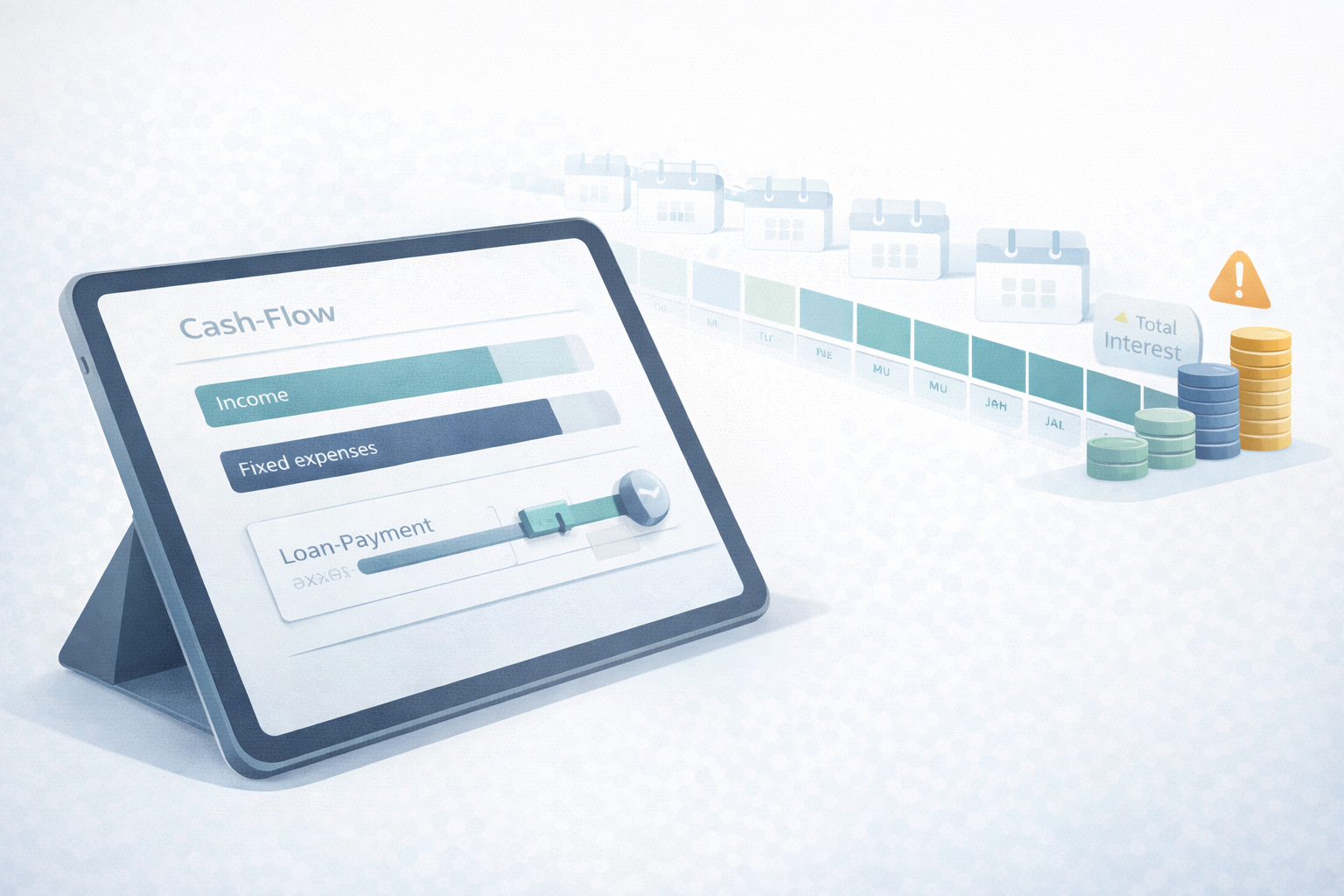
Facing a new loan often means choosing between two distinct paths: paying less each month or becoming debt-free sooner. This timeline acts as a powerful lever for your household budget. While insights from Symple Lending suggest extending your loan term creates immediate room for cash flow planning, this flexibility comes with a specific trade-off—lower monthly bills invariably increase the total price of borrowing.

The Price of Monthly Breathing Room: Comparing 3-Year vs. 5-Year Loans

Consider a real-world scenario using a $10,000 personal loan at a 10% interest rate. If you choose a 3-year timeline, your bill sits around $323 per month. Extending that commitment to 5 years drops the bill to about $212. That extra $111 in your pocket every month offers immediate breathing room, making it easier to handle unexpected expenses like a car repair without breaking your budget.

However, keeping the bank’s money longer creates a different kind of expense. While you benefit from a lower monthly payment, you are paying for two extra years of interest. The 3-year option costs about $1,600 in interest, whereas the total interest paid over life of loan for the 5-year term jumps to roughly $2,700. This is your Total Cost of Borrowing: an $1,100 premium for monthly flexibility. While this cost is often worth it for cash flow, extending a loan too far can sometimes lead to owing more than your asset is worth.

When a Long Term Becomes a Liability: Avoiding the 'Upside Down' Trap

Extending payments offers immediate budget relief but keeps your principal balance high for years. This creates a specific risk of longer loan term called negative equity, or being "upside down." If your purchase loses value faster than you pay it off, you end up owing more than the item is worth. This situation traps you if you need to sell or trade in the asset early, as the sale price won't cover the remaining debt.

Avoiding negative equity on long-term loans means ensuring the loan term doesn't outlast the useful lifespan of what you bought. Managing debt with longer repayment periods is safest when applied to stable assets rather than goods that depreciate quickly. Watching your loan-to-value ratio ensures the extended term remains a helpful tool rather than a future liability, allowing you to use that flexibility as a deliberate financial safety net.

How to Use an Extended Term as a Financial Safety Net

Treat the extended timeline as an insurance policy rather than a requirement. Secure financial flexibility through extended loan terms by locking in a lower mandatory bill, then use an extra payments strategy to mimic a shorter term's payoff schedule whenever your budget allows. This approach protects your cash flow during emergencies while still saving on interest. To ensure this safeguards your wallet rather than draining it, honest budgeting for loan payments starts with four checks:

  1. Is my income stable?
  2. Do I have an emergency fund?
  3. Am I stretching beyond my needs?
  4. Can I commit to extra payments later?

Choosing the Right Path for Your Financial Future

Selecting the right loan term for your budget turns a monthly payment into a tool for stability. This approach to strategic debt management for consumers ensures you balance immediate cash flow needs with future goals. To see which options fit your specific plan, Check Your Rate.

Disclaimer: The information provided in this blog post is for educational and informational purposes only and should not be considered as financial, legal, investment, or tax advice. Symple Lending is not responsible for any financial outcomes resulting from following the information or ideas shared in this blog. Every individual's financial situation is unique, and we strongly encourage readers to take their own circumstances into consideration and consult with a qualified financial, legal, tax, and investment advisor before making any financial decisions. Symple Lending does not provide financial, legal, tax, or investment advice.

Cash Flow Planning: When a Longer Term Helps—and When It Hurts

Cash Flow Planning: When a Longer Term Helps—and When It Hurts

Facing a new loan often means choosing between two distinct paths: paying less each month or becoming debt-free sooner. This timeline acts as a...

Continue Reading
How to Master Seasonal Costs Planning: A Step-by-Step Guide to Spring Expenses

How to Master Seasonal Costs Planning: A Step-by-Step Guide to Spring Expenses

Here's something most people don't realize: spring expenses aren't surprises. They're just costs we forget to plan for. Travel, home repairs, outdoor...

Continue Reading
One Payment, One Rate, One Payoff Date: Inside the Path Replacing Credit Card Chaos

One Payment, One Rate, One Payoff Date: Inside the Path Replacing Credit Card Chaos

For many households, credit card balances don’t become stressful all at once.

Continue Reading
Creating Financial Stability: When a Personal Loan Helps and When It Hurts

Creating Financial Stability: When a Personal Loan Helps and When It Hurts

Did you know the average American carries over $100,000 in total existing debt when mortgages, auto loans, credit cards, student loan debt, and other...

Continue Reading
How to Master Seasonal Costs Planning: A Step-by-Step Guide to Spring Expenses

How to Master Seasonal Costs Planning: A Step-by-Step Guide to Spring Expenses

Here's something most people don't realize: spring expenses aren't surprises. They're just costs we forget to plan for. Travel, home repairs, outdoor...

Continue Reading
When to Apply for a Loan: Timing Tips to Improve Your Approval Chances

When to Apply for a Loan: Timing Tips to Improve Your Approval Chances

Applying for a loan can feel like a test you didn't get to study for. You hit 'submit' and hope for the best, feeling like the outcome is out of your...

Continue Reading